

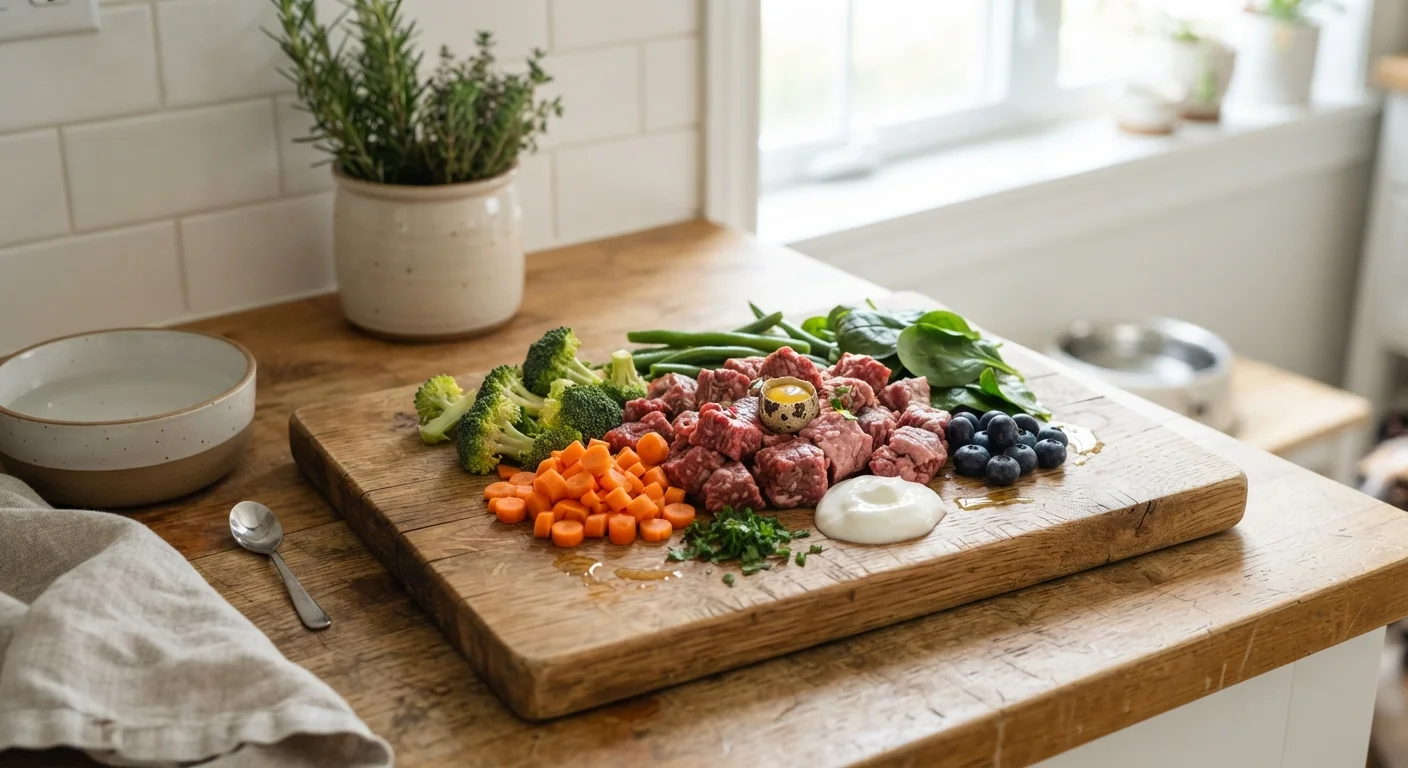
Why Raw Feeding Sparks Such Strong Debate
Few topics in pet nutrition generate as much passion as raw feeding. Proponents describe dramatic improvements in coat quality, digestion, and energy levels. Critics - many of them veterinary professionals - point to measurable safety risks and nutritional gaps. Both sides often overstate their case.
The reality is that raw pet diets occupy genuinely contested scientific territory. Some claims made by advocates are simply false. Others reflect real but incomplete evidence. And some criticisms leveled at raw feeding apply equally to poorly formulated commercial diets. Understanding the distinctions matters if you want to make an informed decision for your animal.
This breakdown examines the most common myths on both sides of the debate and sets them against what veterinary nutrition science currently supports. For a broader look at how to evaluate any pet food - raw or otherwise - see our guide to reading pet food labels.
Myth
Dogs and cats are biologically identical to wolves and wild cats, so a raw prey-based diet is their natural optimum.
Fact
Thousands of years of domestication have produced meaningful genetic and metabolic differences between domestic pets and their wild ancestors.
Dogs have evolved alongside humans for at least 15,000 years, and genomic research has documented adaptations in starch digestion - including increased copies of the amylase gene - that wolves do not share. Domestic cats remain obligate carnivores, but their nutritional needs have been refined by selective breeding and controlled environments that differ substantially from wild hunting life. The "ancestral diet" argument oversimplifies both evolutionary biology and modern nutritional science. What a wolf thrives on in the wild is not a validated template for a 12-pound domestic dog living indoors.
Myth
Raw diets are always nutritionally complete and superior to commercial kibble.
Fact
Nutritional completeness in raw diets varies enormously and is not guaranteed without careful, professional formulation.
Multiple analyses of raw diet recipes - both home-prepared and commercial - have found significant nutritional imbalances. Common deficiencies include calcium, zinc, vitamin D, and iodine. Excesses in certain nutrients are also possible, particularly with high organ meat ratios. By contrast, commercial foods that meet AAFCO (Association of American Feed Control Officials) nutritional profiles have been formulated to hit defined targets. That doesn't make kibble automatically superior, but it does mean "raw" is not synonymous with "complete." Any raw diet should be reviewed by a board-certified veterinary nutritionist.
Myth
Cooking destroys all the nutritional value in pet food, making raw the only viable option.
Fact
Cooking affects some heat-sensitive nutrients but does not strip pet food of its core nutritional value when diets are properly formulated.
It is accurate that heat processing can reduce some vitamins - particularly certain B vitamins and vitamin C. However, reputable commercial manufacturers account for this through formulation adjustments and post-processing supplementation. Proteins are denatured by heat, but denaturation does not eliminate their amino acid content or digestibility; in some cases it can improve it. The claim that cooking renders food nutritionally inert is not supported by food science. Digestibility studies on high-quality cooked commercial diets show that essential nutrients remain bioavailable.
Myth
Raw feeding is perfectly safe because pets have stomach acid strong enough to kill any pathogens.
Fact
Gastric acid does reduce pathogen load but does not eliminate it, and pets can shed dangerous bacteria even without showing symptoms.
A pet's digestive system is more resilient to certain bacteria than a human's, but this does not confer immunity. Studies have documented that dogs and cats fed raw diets can shed Salmonella, Campylobacter, and other pathogens in their feces without appearing ill. These pathogens can then contaminate household surfaces, food prep areas, and be transmitted to people through normal pet contact. The risk is particularly significant in households with immunocompromised individuals, infants, or elderly family members. Safe handling protocols - including dedicated utensils, thorough surface disinfection, and handwashing - are essential, not optional.
Myth
Veterinarians oppose raw feeding purely because of commercial pet food industry influence.
Fact
Veterinary caution about raw diets is grounded in documented clinical and public health evidence, not simply industry alignment.
This claim is a form of motivation-attribution that dismisses legitimate scientific concern without engaging with the evidence. Veterinary organizations cite specific, peer-reviewed data on pathogen contamination, nutritional imbalance, and zoonotic disease risk - the same kinds of evidence-based criteria applied to other dietary recommendations. While conflicts of interest exist in many fields and are worth scrutinizing, characterizing all veterinary skepticism as industry capture misrepresents how clinical nutrition guidelines are developed and evaluated.
What the Evidence Actually Supports
Veterinary nutrition is not monolithic on raw feeding. Major organizations like the American Veterinary Medical Association (AVMA) and the American Animal Hospital Association (AAHA) have published position statements discouraging raw protein diets, primarily citing pathogen risks to both animals and humans in the household. At the same time, board-certified veterinary nutritionists acknowledge that a carefully formulated, properly handled raw diet can meet a pet's nutritional needs.
The key word is carefully. Research has consistently found that a significant proportion of commercially available raw pet foods contain detectable levels of pathogens. A study published in Vet Record found Listeria monocytogenes and other harmful bacteria in a substantial share of tested raw products. These pathogens pose risk not just to the pet but to immunocompromised people, young children, and elderly individuals in the same home.
Household Pathogen Risk Is Real and Documented
Raw pet diets have been linked to Salmonella and Listeria contamination in homes, with transmission risk extending to people who handle the food or come into contact with the pet. The CDC and AVMA both advise particular caution in households with young children, pregnant individuals, elderly adults, or anyone with a compromised immune system. If you choose to feed raw, strict food-safety protocols are not optional - they are a necessary part of the practice.
Nutritional balance is the other major variable. Raw diets that rely on muscle meat alone - without appropriate organ meat, bone, and supplementation - frequently fall short on calcium, phosphorus ratios, and key vitamins. If you're evaluating any dietary approach for a new pet, our article on common first-year nutrition mistakes covers how early dietary decisions can have lasting effects. For comparison on another contested pet food topic, see what the research shows about grain-free diets.
This article is for general informational and educational purposes only and does not constitute veterinary or medical advice. Always consult a licensed veterinarian or board-certified veterinary nutritionist before making significant changes to your pet's diet.
The content provided on our blog site traverses numerous categories, offering readers valuable and practical information. Readers can use the editorial team’s research and data to gain more insights into their topics of interest. However, they are requested not to treat the articles as conclusive. The website team cannot be held responsible for differences in data or inaccuracies found across other platforms. Please also note that the site might also miss out on various schemes and offers available that the readers may find more beneficial than the ones we cover.