

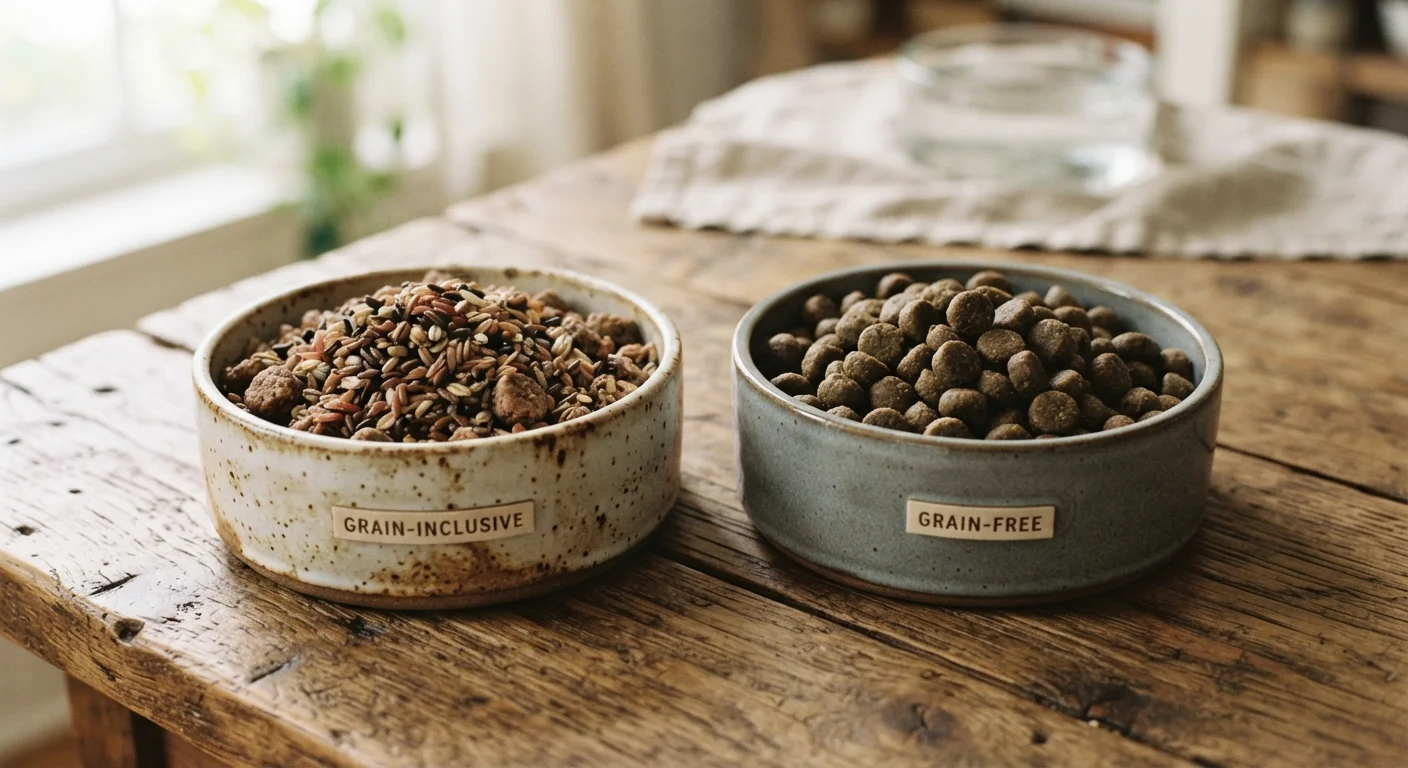
Option A
Grain-Free Pet Diets
The popular, protein-forward alternative.
Best for: Pets with confirmed grain allergies or sensitivities, under veterinary guidance.
Option B
Grain-Inclusive Pet Diets
The established, research-backed standard.
Best for: Most healthy dogs and cats seeking balanced, complete nutrition with a long safety record.
How We Got Here: The Rise of Grain-Free Pet Food
Grain-free pet diets surged in popularity during the 2000s and 2010s, largely mirroring human wellness trends that positioned grains as inflammatory or unnecessary. Marketing emphasized ancestral diets and high meat content, which resonated with owners who wanted to feed their pets more naturally. By the mid-2010s, grain-free had become one of the fastest-growing segments in the pet food industry.
The appeal made intuitive sense: wolves don't eat kibble, so perhaps domesticated dogs would thrive on a diet closer to their wild cousins. The problem is that domesticated dogs have co-evolved alongside humans for thousands of years and have developed measurable genetic adaptations for starch digestion - something that sets them apart from wolves in meaningful nutritional ways. Cats, as obligate carnivores, have genuinely limited carbohydrate metabolism, but that distinction gets muddied when blanket grain-free claims are applied across all pets.
Understanding what grains actually contribute - and what replacing them with legumes or potatoes does - is essential before evaluating either approach. For a closer look at how ingredient lists reflect what's really in your pet's bowl, see reading a pet food label.
What Grains and Grain Substitutes Actually Provide
Common grains used in pet food - rice, oats, barley, and corn - are not empty fillers. They supply digestible carbohydrates for energy, dietary fiber that supports gut motility, and micronutrients including B vitamins and minerals. When formulated correctly, they contribute to a nutritionally complete diet without excess calories from fat.
Grain-free formulas typically substitute these with legumes (lentils, peas, chickpeas) or starchy vegetables like potatoes and tapioca. These alternatives can provide energy and fiber, but they change the nutrient profile of the diet in ways that researchers are still working to fully understand.
| Criterion | Grain-Free Diets | Grain-Inclusive Diets |
|---|---|---|
| Primary carbohydrate source | Legumes, potatoes, tapioca | Rice, oats, barley, corn |
| Feeding trial research history | Limited long-term data | Decades of AAFCO trial evidence |
| DCM cardiac risk signal | Under active FDA investigation | No identified association |
| Appropriate for grain allergies | Yes, with vet confirmation | Not suitable if allergy confirmed |
| Protein content (typical) | Often higher, varies by brand | Moderate to high, varies by formula |
| Fiber and gut health support | Legume fiber; effects differ | Whole grain fiber; well studied |
| Taurine considerations | Potential bioavailability concerns | Generally adequate in complete formulas |
The key insight is that grains are rarely the problem in pet diets. True grain allergies in dogs and cats are uncommon; veterinary dermatologists note that animal proteins such as beef, dairy, and chicken are far more frequent allergens. If your pet shows signs of food sensitivity, an elimination diet trial guided by a vet is the appropriate diagnostic path - not a spontaneous switch to grain-free food.
The DCM Research: What We Know and Don't Know
In 2018, the U.S. Food and Drug Administration (FDA) began investigating reports of dilated cardiomyopathy (DCM) - a serious heart condition - in dog breeds not genetically predisposed to it. A disproportionate number of affected dogs were eating grain-free diets, particularly those high in legume ingredients like peas and lentils.
560+
Dog DCM cases reported to FDA
Between January 2014 and April 2019, the FDA received reports of over 560 dogs diagnosed with DCM, with the majority eating grain-free diets, according to FDA case data.
~1-2%
Estimated prevalence of true grain allergies in dogs
Veterinary dermatology literature suggests grain allergies are uncommon in dogs; animal proteins account for the majority of confirmed food-related hypersensitivity cases.
91%
DCM-affected dogs eating legume-rich grain-free food
According to the FDA's 2019 update, approximately 91% of the grain-free diet cases involved foods with peas, lentils, or other legumes listed among the first ten ingredients.
The FDA investigation has not established a definitive causal link. Several hypotheses have been explored, including reduced taurine bioavailability in some grain-free formulas, interactions between legume compounds and nutrient absorption, and the overall nutritional balance of these diets. Research is ongoing, and no single ingredient has been conclusively identified as the cause.
What veterinary cardiologists and nutritionists broadly agree on is this: the precautionary evidence is strong enough to warrant caution, especially for larger breeds already at elevated cardiac risk. The American College of Veterinary Internal Medicine issued a consensus statement recommending that owners of dogs diagnosed with DCM discuss diet with their veterinarian promptly.
This situation illustrates why long feeding-trial histories matter. Grain-inclusive formulas carrying AAFCO (Association of American Feed Control Officials) feeding trial statements have a longer track record of monitored outcomes - something many grain-free options lack.
Making an Informed Choice for Your Pet
For most healthy dogs without a confirmed grain allergy or sensitivity, grain-inclusive diets that meet AAFCO nutritional standards remain the well-supported default. The research base is deeper, the feeding trial histories are longer, and the current DCM signal - however preliminary - adds a reason to be thoughtful about unnecessary switching.
For cats, the calculus is different in that high-protein intake is genuinely critical, but grain-inclusive formulas can absolutely deliver that alongside adequate carbohydrates. The grain-free label on cat food does not automatically mean more protein or better nutrition - formulation quality matters more than any single ingredient category.
If you suspect your pet has a food sensitivity, work with your veterinarian to design a structured elimination diet before drawing conclusions. Similarly, if your pet is already eating a grain-free diet and thriving, a conversation with your vet about cardiac monitoring and taurine levels is a reasonable precaution rather than an immediate cause for alarm.
The broader lesson here parallels what nutrition researchers have found in human dietary debates: categorically eliminating a nutrient class rarely produces the benefits marketing promises. For a useful parallel, understanding how food processing affects nutritional value offers relevant context on how ingredient quality and processing interact in ways that go beyond simple labels.
This article is for general informational and educational purposes only and does not constitute veterinary or medical advice. Always consult a licensed veterinarian before making significant changes to your pet's diet, especially if your pet has an existing health condition.
The content provided on our blog site traverses numerous categories, offering readers valuable and practical information. Readers can use the editorial team’s research and data to gain more insights into their topics of interest. However, they are requested not to treat the articles as conclusive. The website team cannot be held responsible for differences in data or inaccuracies found across other platforms. Please also note that the site might also miss out on various schemes and offers available that the readers may find more beneficial than the ones we cover.