

Why the Cage Aisle at the Pet Store Isn't the Best Starting Point
Walk into almost any general pet retailer and you'll find an entire section of cages sized and priced for convenience - not for the animals that will live in them. For guinea pigs and hamsters especially, the gap between what's commercially available and what these animals genuinely need is striking. Understanding that gap is the first step toward giving a small pet a genuinely good life.
The myth-versus-fact pairs below address the most persistent misconceptions that lead owners to under-house, under-stimulate, and inadvertently stress their small mammals. If you're setting up a new enclosure or reconsidering an existing one, this is where to start.
Myth
The cage sold at the pet store is the right size for my guinea pig or hamster.
Fact
Most retail cages marketed for small mammals fall well below minimum space recommendations set by animal welfare organizations.
Packaging labels like "starter home" or "deluxe habitat" are marketing terms, not welfare standards. Many widely sold guinea pig cages offer fewer than 4 square feet of floor space, while the commonly cited welfare guideline for a single guinea pig is at least 7.5 square feet - with more required for pairs. For Syrian hamsters, animal welfare groups in Europe have pushed for a minimum of roughly 1,000 square centimeters (about 1.5-2 square feet) of unobstructed floor space, with adequate depth for burrowing. Cages meeting those thresholds are rarely stocked on typical pet store shelves.
The consequences of chronic confinement are well-documented in small mammal behavior research: stereotypic behaviors (repetitive, seemingly purposeless movements like bar-chewing and pacing) are strong indicators of stress in hamsters and have been directly linked to insufficient space and stimulation. If your enclosure is the one that came in a starter kit, it is almost certainly worth upgrading.
Myth
Guinea pigs and hamsters have the same basic care needs, so their housing setup can be nearly identical.
Fact
Guinea pigs and hamsters are biologically and socially quite different; what works well for one species can be harmful for the other.
Guinea pigs (Cavia porcellus) are highly social, herd-dwelling animals. Keeping a guinea pig alone - without regular human interaction or a guinea pig companion - is considered a welfare concern by many veterinary and animal protection bodies. They thrive in open, horizontal space with visual access to their surroundings, hay as the bulk of their diet, and no wire floors, which can cause a painful condition called bumblefoot.
Hamsters, by contrast, are largely solitary and territorial. Most species - including Syrian hamsters, the most common pet variety - must be housed alone after reaching maturity; cohousing adults frequently results in serious injury or death. Hamsters also need significant burrowing depth (a minimum of 6 inches of substrate is a reasonable starting point, with deeper being better) and are crepuscular, meaning they are most active at dawn and dusk. Placing their enclosure in a noisy, brightly lit area disrupts their natural cycle and causes chronic stress.
Myth
Any soft bedding from the pet store is safe and appropriate for small animals.
Fact
Bedding material and depth both matter enormously - some common options carry real health risks.
Cedar and pine shavings - still widely available in stores - contain aromatic phenols that can irritate and damage small animals' respiratory tracts and livers with prolonged exposure. Veterinary guidance consistently recommends avoiding them in favor of kiln-dried aspen shavings, paper-based bedding, or hemp products. Scented beddings, regardless of material, should also be avoided.
Beyond material, depth is critical for hamsters in particular. Hamsters are natural burrowers; a shallow half-inch layer of substrate doesn't allow them to express this instinct and contributes to stress. Paper-based bedding provided at sufficient depth - enough for the animal to construct tunnels - supports both physical and psychological wellbeing. For guinea pigs, fleece liners used with an absorbent layer underneath are a popular alternative, provided they are washed frequently enough to prevent ammonia buildup, which causes respiratory irritation.
Myth
A running wheel gives hamsters all the exercise they need.
Fact
Wheels must be the correct size and surface type, and exercise alone doesn't replace the need for adequate enclosure space and enrichment.
A wheel that is too small forces a hamster to run with a curved spine, which over time can cause musculoskeletal problems. Syrian hamsters need a solid-surface (not wire or mesh) wheel with a diameter of at least 10-11 inches. Dwarf hamster varieties can use slightly smaller wheels - typically 8 inches - but the solid surface requirement applies across the board. Wire wheels risk foot and leg injuries.
Wheels are a valuable tool, but they are one component of enrichment, not a substitute for space or variety. Enrichment is as essential as food and water for small mammals - that means hides, tunnels, foraging opportunities, and regular environmental novelty. A hamster living in a small cage with only a wheel is not a hamster thriving; it is a hamster coping.
Myth
Small pets don't need veterinary care the way dogs and cats do.
Fact
Guinea pigs and hamsters require routine veterinary attention and can develop serious health issues that go undetected without professional assessment.
Small mammals are prey animals and instinctively mask signs of illness until a condition becomes advanced. Guinea pigs require regular checks for dental issues (their teeth grow continuously), respiratory infections, skin parasites, and vitamin C deficiency - they cannot synthesize their own vitamin C, which makes dietary adequacy critical. Hamsters are prone to wet tail (a severe gastrointestinal condition), cheek pouch impaction, and diabetes in some dwarf species.
Establishing care with a veterinarian experienced in exotic or small mammal medicine before any health crisis occurs is strongly recommended. Owners should monitor weight weekly using a kitchen scale, watch for changes in eating, drinking, and elimination habits, and act promptly on any abnormality. When in doubt, consult a qualified veterinarian rather than relying on internet forums or generalist pet care content - including this article. For a broader look at everyday health priorities, the Pet Health & Wellness hub offers additional guidance across common pet species.
Building a Better Habitat: What Actually Matters
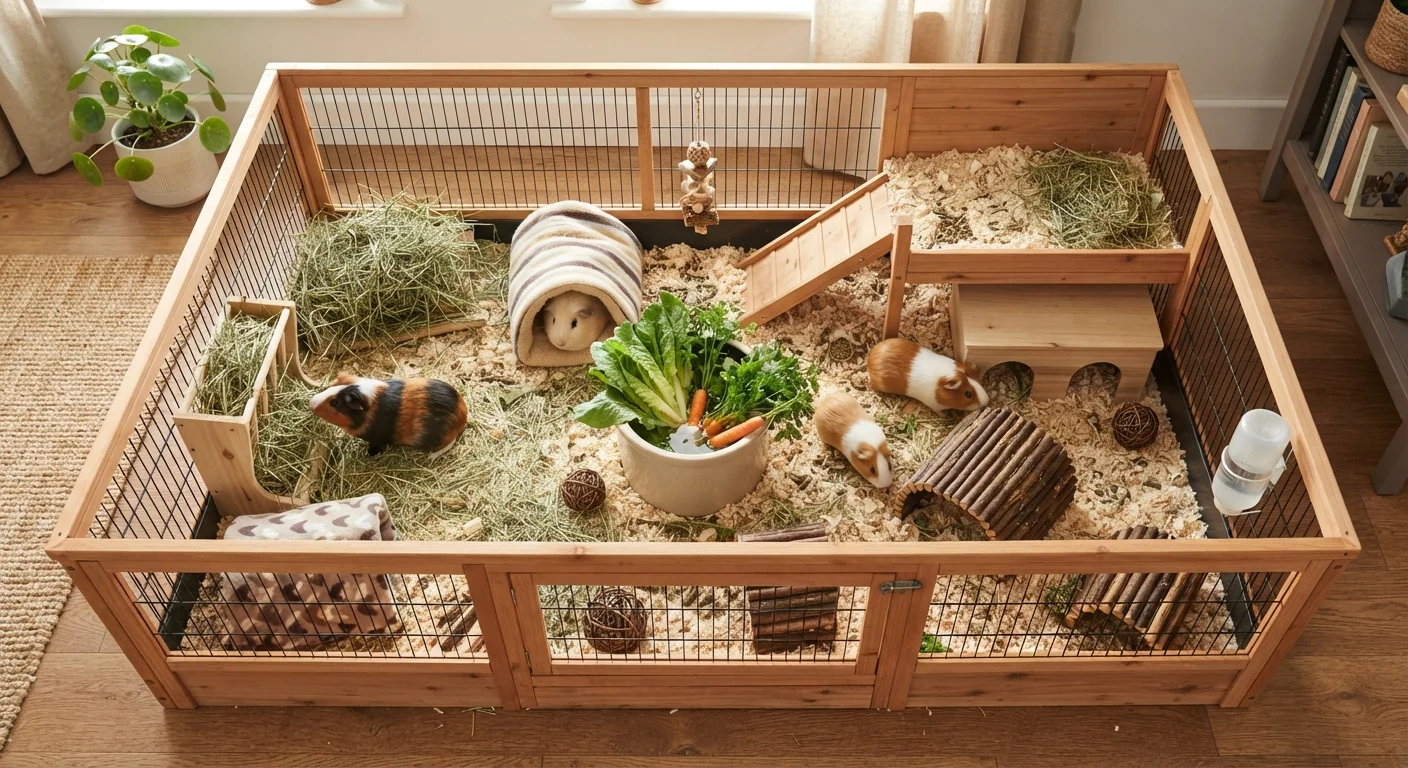
Once the common misconceptions are out of the way, the practical picture becomes clearer. For guinea pigs, this typically means a large C&C (coroplast and cube grid) enclosure or a purpose-built pen - structures that allow the 7.5+ square feet of unobstructed floor space that pairs of guinea pigs need. These are rarely found pre-assembled in stores, but they are widely achievable with modular grid systems and basic DIY assembly.
For hamsters, a 40-gallon glass aquarium repurposed as a habitat, a large bin cage, or a dedicated hamster tank with secure ventilation often provides better floor space and burrowing depth than purpose-sold cages. The enclosure should sit in a consistently quiet, low-light location to respect the animal's natural activity cycle.
Wire Floors and Mesh Surfaces Are a Hazard
Many commercially sold cages include wire-mesh floors or ramps intended to allow waste to fall through. For guinea pigs, these surfaces are a leading cause of bumblefoot (pododermatitis), a painful and potentially serious foot infection. For hamsters, wire mesh poses a foot-entrapment and injury risk. All walking and living surfaces should be solid and appropriately cushioned with bedding or a safe liner.
Enrichment shouldn't be an afterthought. Tunnels, cork hides, cardboard structures, and scatter-feeding (hiding food items in the bedding to encourage foraging) all address behavioral needs that a bare enclosure cannot meet. If you share your home with other species, the practical strategies for multi-pet households can help you think through placement and safe coexistence. And if you're expanding your small animal family, a structured introduction plan helps resident and incoming animals adjust without undue stress.
7.5 sq ft
Minimum floor space for one guinea pig
Animal welfare organizations generally recommend at least 7.5 square feet for a single guinea pig, with 10.5 or more for a pair.
6+ inches
Recommended minimum bedding depth for hamsters
Animal behavior researchers have found that hamsters provided with deeper substrate exhibit significantly fewer stress-related stereotypic behaviors.
10-11 inches
Minimum wheel diameter for Syrian hamsters
Smaller wheels force an arched running posture that can contribute to spinal stress over time; solid-surface wheels of this size are the standard recommendation.
This article is for general educational purposes only and is not a substitute for advice from a qualified veterinarian familiar with small mammal care. Always consult a professional for concerns about your pet's health or wellbeing.
The content provided on our blog site traverses numerous categories, offering readers valuable and practical information. Readers can use the editorial team’s research and data to gain more insights into their topics of interest. However, they are requested not to treat the articles as conclusive. The website team cannot be held responsible for differences in data or inaccuracies found across other platforms. Please also note that the site might also miss out on various schemes and offers available that the readers may find more beneficial than the ones we cover.