

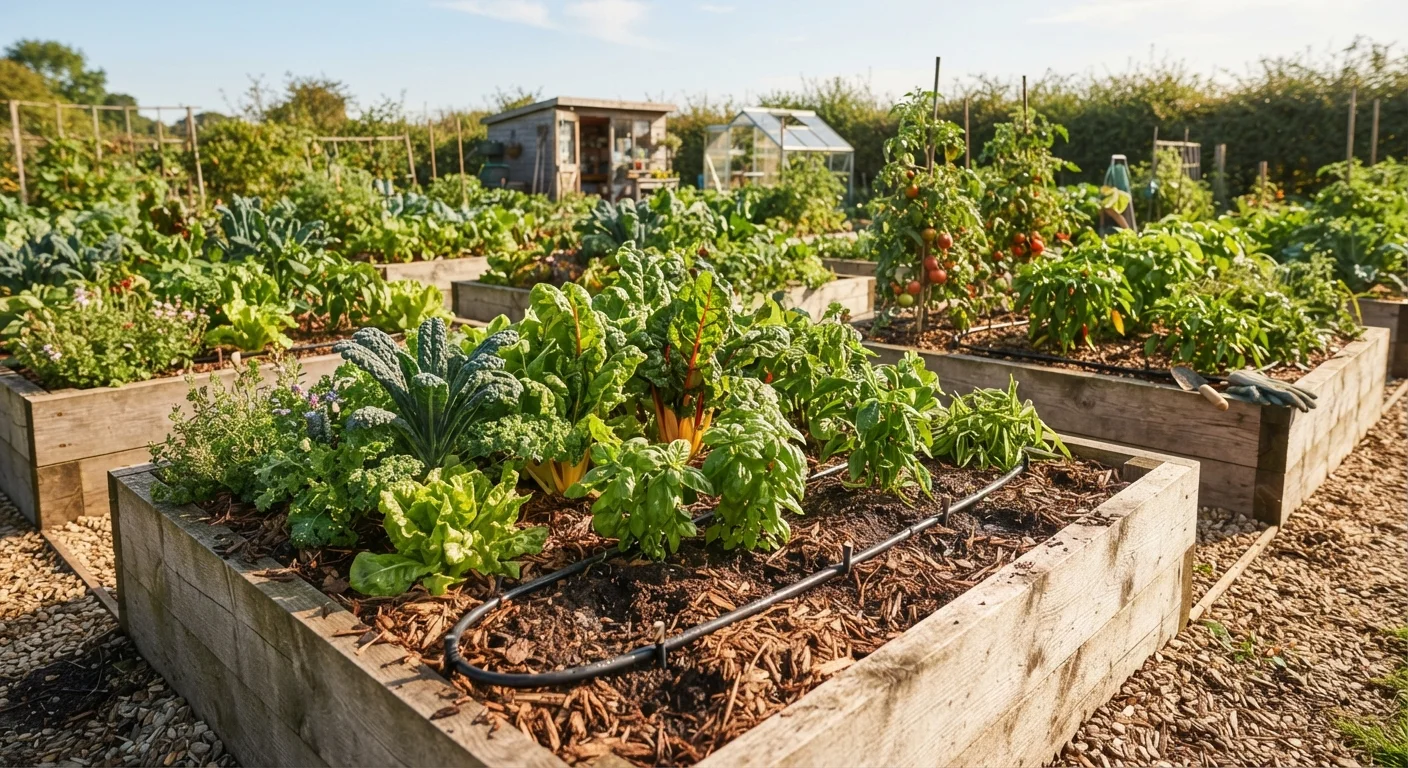
Why Vegetables Struggle When Rainfall Is Scarce
Vegetable crops are among the most water-dependent plants in the home garden. Unlike many ornamental perennials - which have years to establish deep root systems - most vegetables complete their entire lifecycle in a single season, relying on consistent moisture to form the fruits, roots, and leaves we eat. When rainfall falls short, they shift resources away from production and toward survival, meaning smaller yields, bitter flavors, blossom drop, and in severe cases, crop failure.
Understanding where water actually goes in a garden helps explain why simply watering more is not always the answer. Surface evaporation, runoff from compacted soil, and competition from weeds and even nearby plants all reduce the water available to vegetable roots. The strategies that work during a drought target each of these losses systematically rather than just increasing the volume applied.
It is also worth noting that overwatering carries its own risks - waterlogged soil suffocates roots and promotes disease. The goal during a drought is efficient, targeted delivery of water where plants actually need it.
What you will need
Step-by-Step: Protecting Your Garden Through Dry Conditions
The steps below move from immediate infrastructure and technique changes through longer-term planning decisions. Work through them in order for the most complete drought response, or jump to the steps most relevant to your current situation.
Drip Irrigation Kit or Soaker Hose
Delivers water directly to the root zone with minimal surface evaporation, making every gallon count during drought.
Soil Moisture Probe or Meter
Measures moisture several inches below the surface so you water based on actual need rather than guesswork.
Organic Mulch (straw, wood chips, or shredded leaves)
Spread over bare soil to insulate, reduce evaporation, and suppress moisture-stealing weeds.
Shade Cloth (30-40% density)
Temporarily reduces heat load on plants during extreme dry spells, lowering transpiration stress.
Watering Wand or Hose Nozzle
Allows precise low-pressure watering at the soil level, reducing splash and runoff.
Audit your current watering setup
Before a drought takes hold, walk your garden and assess how water is being applied. Overhead sprinklers lose a significant portion of water to evaporation before it reaches roots. If that is what you are using, consider converting at least your most water-hungry beds to drip lines or soaker hoses. Note any low spots where water pools and high spots where it runs off - these will need different treatment during water-restricted periods.
Switch to deep, infrequent watering
Shallow daily watering keeps moisture near the surface, which encourages shallow root systems that suffer quickly when soil dries. Instead, water deeply - enough to wet the soil 6-8 inches down - and then allow the top few inches to dry before watering again. Most established vegetable plants benefit from this approach, developing deeper roots that access moisture longer after each watering event.
Time your irrigation for early morning
Water applied early in the morning soaks into the soil before afternoon heat can evaporate it. It also allows any moisture on leaves (from splashing) to dry before evening, reducing fungal disease risk. If morning watering is not possible, late evening is a reasonable backup - just keep water off foliage.
Apply a generous mulch layer
Bare soil loses moisture rapidly. Spread 3-4 inches of organic mulch - straw, untreated wood chips, or shredded leaves are all effective - over the root zone of your plants, keeping it a few inches away from stems to prevent rot. Mulch slows evaporation, moderates soil temperature, and suppresses weeds that compete for water. For guidance on material choices and application timing, see our in-depth mulching guide.
Remove weeds promptly and completely
Weeds are quiet competitors - each one drawing water and nutrients away from your vegetables. During a drought, this competition becomes costly. Pull weeds when they are small, roots and all, and dispose of them rather than leaving them to re-root. Focus especially on the area within 12 inches of your vegetable plants.
Prioritize which crops receive water first
Not all vegetables have the same water needs or the same payoff. Fruiting crops like tomatoes, squash, and peppers suffer yield and quality losses quickly when stressed. Leafy greens and root vegetables are often slightly more forgiving once established. In a severe shortage, water fruiting crops first and allow some less critical crops to experience mild stress. Avoid letting any crop reach wilting point during fruit set, as this stage is especially sensitive.
Use shade cloth during extreme heat
High temperatures accelerate water loss through plant leaves (transpiration). A 30-40% density shade cloth draped over hoops above vulnerable crops can meaningfully reduce heat stress and slow moisture demand on the worst days. This is particularly useful for leafy greens that bolt rapidly in heat. Remove or lift the cloth during cooler parts of the day or when temperatures moderate.
Plan ahead with drought-tolerant varieties
If you are preparing for a season that may be dry, seed selection is one of your strongest tools. Many vegetable varieties have been bred or selected for heat and drought tolerance - descriptions in seed catalogs often note this. Crops such as cowpeas, Armenian cucumber, amaranth, and certain tomato varieties have demonstrated improved performance under drier conditions. Planning next season's garden with variety selection in mind can reduce the effort drought management requires.
Check Soil Depth, Not Just the Surface
The top inch of soil dries out quickly and is a poor indicator of what your roots actually need. Push a finger or a soil probe 3-4 inches down before deciding whether to water. If it feels moist at that depth, most vegetable crops can wait another day or two.
Avoid Watering Foliage in Hot Conditions
Spraying leaves during the hottest part of the day does not help plants cool down and can contribute to fungal disease. Direct water at the soil around the root zone. For more on common watering misconceptions, see garden myths that quietly hurt plants.
Don't Skip Watering Entirely
Even drought-tolerant vegetables need consistent soil moisture to produce edible crops - drought resilience means efficient use of water, not zero water. If soil is bone dry several inches down, vegetable plants will bolt, drop fruit, or fail before harvest. Monitor soil moisture regularly and supplement with hand watering when needed, even if overall water use is reduced.
Recovering After a Drought and Planning Ahead
Once rains return or irrigation restrictions ease, resist the urge to flood the garden immediately. Reintroduce heavier watering gradually over several days to avoid shocking roots that have adapted to drier conditions. Soil that has become very dry can also become temporarily hydrophobic - water beads on the surface rather than soaking in. Working in compost and watering gently in multiple passes helps restore normal absorption.
Post-drought is also a good time to evaluate what worked. Which crops came through with minimal intervention? Where did mulch make the most difference? Documenting these observations, even informally, informs better decisions next season. Consider whether raised beds or in-ground planting performed differently, and whether your soil's organic matter content - which improves moisture retention - could be built up with compost additions over the fall and winter.
For gardeners thinking beyond vegetables, low-maintenance ground covers can help stabilize bare areas of the yard and reduce overall water demand during future dry stretches.
The content provided on our blog site traverses numerous categories, offering readers valuable and practical information. Readers can use the editorial team’s research and data to gain more insights into their topics of interest. However, they are requested not to treat the articles as conclusive. The website team cannot be held responsible for differences in data or inaccuracies found across other platforms. Please also note that the site might also miss out on various schemes and offers available that the readers may find more beneficial than the ones we cover.