

Start here
The First-Timer's Mindset: What Home Improvement Actually Involves
Build your foundation
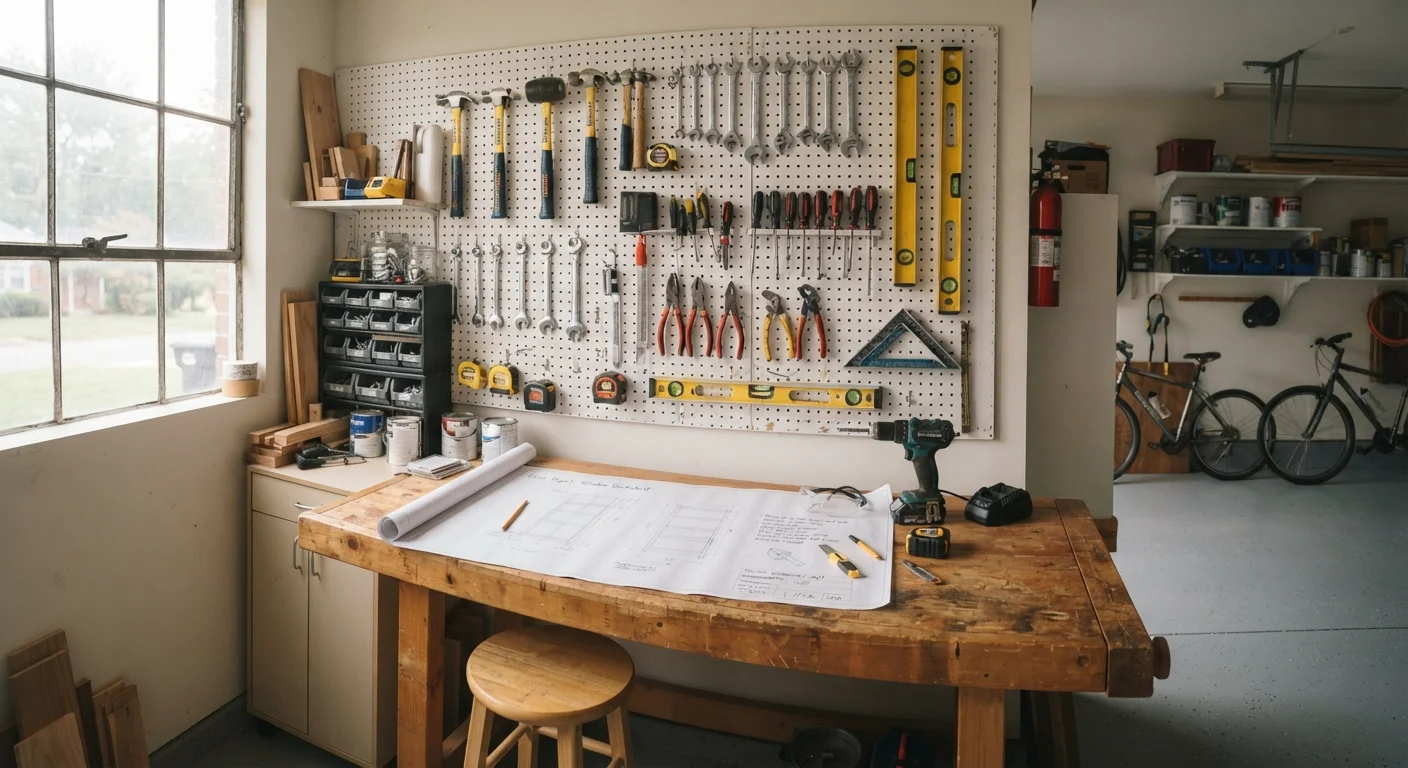
Building Your Starter Tool Kit
Plan ahead
Planning a Project Before You Pick Up a Hammer
Stay safe
Safety Basics Every Homeowner Should Know
Know your limits
When to DIY and When to Call a Professional
The First-Timer's Mindset: What Home Improvement Actually Involves
Home improvement is less about innate skill and more about disciplined preparation. Most first-timers who run into trouble do so not because they lack ability, but because they underestimated the scope, skipped the planning, or took on a project that required licensed expertise. The good news: with the right approach, a wide range of upgrades and repairs are genuinely within reach for someone who has never held a power tool.
Think of home improvement as a spectrum. On one end sit simple cosmetic tasks - painting, patching small holes, replacing fixtures - that almost anyone can learn with a weekend's practice. On the other end sit structural, electrical, gas, and roofing work that carry serious safety and legal obligations. Most projects fall somewhere in the middle, requiring judgment more than heroics.
As you grow your confidence, you may find that a well-organized home supports your projects - check out our room-by-room organization roadmap for ideas on creating functional, clutter-free spaces that are easier to maintain and improve.
Permit
An official approval from your local government authorizing specific construction or renovation work. Required for many structural, electrical, plumbing, and HVAC projects to ensure work meets safety codes.
Load-bearing wall
A wall that supports the weight of the structure above it. Removing or modifying one without engineering support can compromise a home's structural integrity.
PPE (Personal Protective Equipment)
Safety gear worn to protect against injuries on the job - including safety glasses, gloves, hearing protection, and dust masks.
Scope creep
The gradual expansion of a project beyond its original plan, often driving up cost and time. Prevented by defining project boundaries clearly from the start.
Contingency budget
An amount set aside beyond your main project estimate to cover unexpected costs, such as hidden damage discovered mid-project.
Stud finder
A handheld tool that detects the framing studs hidden behind drywall, allowing you to anchor shelves and fixtures securely.
Building Your Starter Tool Kit
You don't need a fully stocked workshop to handle most home repairs. A focused starter kit serves the majority of common tasks without overwhelming your budget or your storage space.
- Tape measure - 25-foot length covers nearly every interior measurement.
- Hammer - A 16-oz. claw hammer handles both driving and pulling nails.
- Cordless drill/driver - Arguably the most versatile tool a homeowner can own; useful for everything from assembling furniture to hanging heavy mirrors.
- Screwdrivers - Both flathead and Phillips in multiple sizes.
- Level - A 24-inch spirit level keeps shelves, frames, and fixtures straight.
- Utility knife - Precise cuts on drywall, carpet, and packaging.
- Adjustable wrench and pliers - Essential for plumbing fixtures and hardware.
- Stud finder - Locates framing behind drywall so you can anchor things securely.
For specialized one-time jobs, consider renting rather than buying. Tool libraries and hardware store rental programs let you use professional-grade equipment - a tile saw, for example - without the long-term storage obligation.
Planning a Project Before You Pick Up a Hammer
Thorough planning is the single biggest factor separating a smooth project from a frustrating, over-budget one. Before starting any improvement, work through these steps:
- Define the scope clearly. Write down exactly what the finished project looks like, including dimensions and materials. Vague goals lead to creeping scope.
- Check permit requirements. Many projects - electrical work, structural changes, additions - legally require a permit from your local building department. Skipping permits can create complications when you sell. Our guide on when your home project requires official approval walks through the most common scenarios.
- Build a realistic materials list. Measure twice, then add 10-15% overage for waste and mistakes. Price out every line item before committing.
- Set a contingency budget. Hidden surprises - old wiring, water damage behind a wall - are common. A 15-20% buffer is widely considered prudent.
- Sequence your steps. Painting before flooring, priming before painting, demo before framing - order matters and can save significant rework.
Start With a Project That Teaches You Something
Choose your first project partly based on what skills it will build, not just the end result. A bathroom repaint, for example, teaches surface prep, cutting in, and roller technique - skills that transfer to every future paint job. Treating early projects as learning experiences, rather than just tasks to complete, accelerates your overall growth as a homeowner.
Safety Basics Every Homeowner Should Know
Safety habits are non-negotiable on any project, regardless of how simple it seems. A few foundational practices prevent the majority of DIY injuries.
- Shut off utilities before you work. Turn off the circuit breaker for any electrical work and close the shutoff valve for plumbing tasks. Confirm power is off with a non-contact voltage tester before touching wires.
- Wear appropriate PPE. Safety glasses, work gloves, and hearing protection are the baseline. Add a dust mask or respirator when cutting, sanding, or working in confined spaces.
- Know what's inside your walls. Electrical wires, plumbing pipes, and gas lines run through wall cavities. Use a stud finder and cable/pipe detector before drilling or cutting into any wall surface.
- Read tool manuals. Each power tool has specific safety requirements. Skipping the manual is how preventable accidents happen.
- Work with a buddy on anything overhead or structural. Ladders, ceiling work, and heavy lifting are all safer - and more manageable - with a second person present.
If you're ever uncertain whether a wall you plan to modify is structural, don't guess. Our article on what homeowners get wrong about load-bearing walls covers the common misconceptions that lead to dangerous mistakes.
Never Assume Utilities Are Off
Even after flipping a breaker or closing a shutoff valve, always verify independently before working. Use a non-contact voltage tester on wires and open a downstream faucet to confirm water pressure is relieved. Assuming is how serious injuries happen - verification takes less than a minute and is always worth it.
When to DIY and When to Call a Professional
Knowing your limits is a skill, not a concession. Certain categories of work carry risks - to your safety, your home's structure, and your legal standing - that make professional involvement not just advisable but often required.
Always hire a licensed professional for:
- Electrical panel work, new circuit installation, or any repair beyond swapping a switch or outlet
- Gas line installation, repair, or appliance connection
- Structural changes, including wall removal - see our deep dive on load-bearing wall realities before assuming any wall is fair game
- Roofing beyond minor surface patching
- Main sewer or water supply line work
Tasks most homeowners can handle with preparation:
- Interior painting and wallpaper removal
- Replacing faucets, showerheads, and toilet components
- Installing light fixtures (after switching off the breaker and confirming with a tester)
- Laying laminate or vinyl plank flooring
- Basic drywall patching and finishing
When evaluating a contractor, ask for proof of licensing and insurance, get multiple written estimates, and verify references. Taking time to vet a professional upfront is far less costly than fixing substandard work after the fact. And if home improvement inspires you to better organize the spaces you're improving, our home organization hub is a natural next step.
Frequently Asked Questions
Low-stakes, high-visibility projects like painting a room, replacing cabinet hardware, or patching drywall are ideal starting points. They build skill and confidence without exposing you to significant safety or structural risk. Success on a small project gives you a realistic feel for how longer projects unfold.
It depends on your local jurisdiction and the scope of the work. Cosmetic changes like painting rarely require permits, but electrical, plumbing, structural, and HVAC work often do. Always check with your local building department before starting any project that changes a home's systems or structure.
A hammer, tape measure, cordless drill, flathead and Phillips screwdrivers, a level, utility knife, adjustable wrench, and needle-nose pliers cover a wide range of common tasks. A stud finder and a set of pliers add meaningful versatility for minimal cost.
Load-bearing walls support the structure above them and cannot be removed without proper engineering support. Signs include walls running perpendicular to floor joists or located in the center of the home, but visual cues alone are not reliable. Consult a structural engineer or licensed contractor before any wall removal.
Any work involving the electrical panel, gas lines, structural changes, roofing, or main plumbing connections should be handled by a licensed professional. Beyond safety, unpermitted or improperly done work can complicate homeowner's insurance claims and hurt resale value.
Get a detailed materials list before buying anything, add a 15-20% contingency buffer to your estimate, and avoid expanding the project's scope mid-way through. Renting specialized tools rather than buying them outright can also keep one-time costs down.
The content provided on our blog site traverses numerous categories, offering readers valuable and practical information. Readers can use the editorial team’s research and data to gain more insights into their topics of interest. However, they are requested not to treat the articles as conclusive. The website team cannot be held responsible for differences in data or inaccuracies found across other platforms. Please also note that the site might also miss out on various schemes and offers available that the readers may find more beneficial than the ones we cover.