

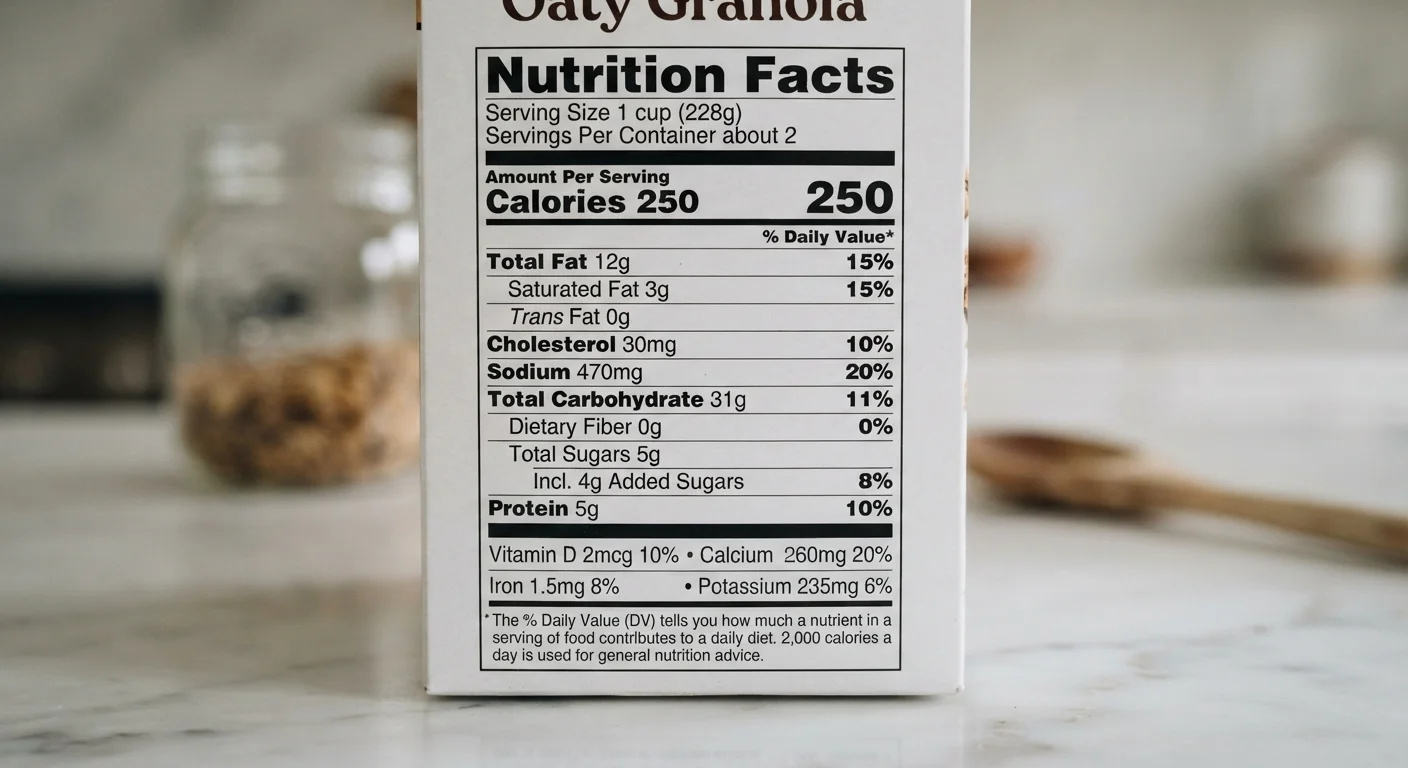
Why the Nutrition Facts Label Matters
The Nutrition Facts label is a federally standardized tool regulated by the U.S. Food and Drug Administration (FDA). It appears on most packaged foods and beverages and is designed to give consumers consistent, comparable nutrition information at a glance. Yet surveys consistently show that many shoppers glance at it without fully understanding what they're reading.
That matters - because misreading the label can lead to real misunderstandings about how nutritious (or not) a food actually is. If you're just starting to pay attention to what you eat, see our beginner's guide to nutrition for foundational context. This article goes a step further: a section-by-section walkthrough of every element on the panel.
The Label Was Updated in 2020
The FDA updated the required Nutrition Facts format for most manufacturers starting in 2020. Key changes include a larger, bolder calorie display, a separate line for 'Added Sugars,' updated Daily Values for several nutrients, and the removal of 'Calories from Fat.' If you're reading an older product, the format may differ slightly.
Step-by-Step: Reading Every Section of the Label
Follow these steps in order - each one builds on the last. Before comparing nutrients, you need to understand the serving, and before interpreting % Daily Values, you need to know what the reference point is.
Start with Serving Size and Servings Per Container
Every number on the label - calories, fat, sodium, everything - is based on one serving. The serving size is listed in both a common household measure (e.g., "1 cup") and grams. It reflects how much people typically eat in one sitting, not necessarily what you should eat.
Check servings per container next. If a drink bottle shows 2.5 servings and you drink the whole thing, all the numbers need to be multiplied by 2.5.
Read Calories Per Serving
Calories measure total energy per serving. The label displays this prominently. Calories aren't the only metric that matters, but for people managing energy intake, this number is a useful anchor - as long as you've already confirmed the serving size applies to how much you're actually eating.
Identify Nutrients to Limit
The FDA identifies four nutrients that most Americans consume in excess and that are associated with increased risk of certain chronic conditions:
- Saturated fat - linked to cardiovascular health when consumed in high amounts
- Trans fat - even small amounts from partially hydrogenated oils are worth avoiding
- Sodium - high intake is associated with elevated blood pressure in some individuals
- Added sugars - distinct from naturally occurring sugars; the label now lists both separately
Note that "Total Fat" also includes unsaturated fats, which are not separately flagged for limitation.
Look for Nutrients to Get Enough Of
Below the nutrients to limit, the label lists nutrients many Americans under-consume:
- Dietary fiber - supports digestive health and satiety
- Vitamin D - important for bone health and immune function
- Calcium - essential for bone density
- Iron - critical for oxygen transport in the blood
- Potassium - supports healthy blood pressure
Aiming for higher % DVs on these nutrients is generally a sound strategy for most healthy adults.
Decode the % Daily Value Column
The % Daily Value (% DV) column is one of the most useful - and most misunderstood - parts of the label. It tells you how much of a nutrient one serving contributes toward the daily intake recommended for a person eating 2,000 calories per day.
The quick rule of thumb established by the FDA:
- 5% DV or less = low in that nutrient
- 20% DV or more = high in that nutrient
Use this to compare similar products or assess where a food fits in your overall daily eating pattern - not as a pass/fail grade.
Scan the Ingredient List
While technically separate from the Nutrition Facts panel, the ingredient list directly below it is equally important. Ingredients are listed by weight, highest to lowest. A short list with recognizable ingredients generally indicates a less processed product - though this isn't an absolute rule.
Watch for multiple names for added sugar: high-fructose corn syrup, cane juice, dextrose, maltose, and fruit juice concentrate all count as added sugars even if they appear separately on the list.
Common Pitfalls and What to Do Instead
Even label-savvy shoppers run into a few consistent traps. Understanding these helps you avoid being misled.
- Ignoring the serving size: A bag of chips labeled 150 calories can hold 3 servings - meaning 450 calories per bag. Always multiply.
- Focusing only on calories: A food can be low in calories but high in sodium or added sugar. Nutritional quality involves the full picture.
- Trusting front-of-package language: Words like "natural," "light," or "multigrain" are largely unregulated. Our article on front-of-package food claims explains what those terms actually mean legally.
- Overlooking the ingredient list: Ingredients are listed in descending order by weight. If added sugar or refined flour appears in the first three ingredients, that item dominates the product.
Labels Reflect Averages, Not Personal Prescriptions
% Daily Values are based on a 2,000-calorie reference diet and general population guidelines. Your individual needs may differ significantly based on age, health status, activity level, or a condition you manage. Always consult a registered dietitian or healthcare provider before making significant dietary changes based on label reading alone.
For a deeper dive into the vocabulary used across nutrition panels and food science, our nutrition terms reference guide covers everything from antioxidants to glycemic index in plain language.
This article is for general informational and educational purposes only and is not a substitute for personalized medical or dietary advice. Consult a registered dietitian or qualified healthcare provider for guidance specific to your health needs.
The content provided on our blog site traverses numerous categories, offering readers valuable and practical information. Readers can use the editorial team’s research and data to gain more insights into their topics of interest. However, they are requested not to treat the articles as conclusive. The website team cannot be held responsible for differences in data or inaccuracies found across other platforms. Please also note that the site might also miss out on various schemes and offers available that the readers may find more beneficial than the ones we cover.