

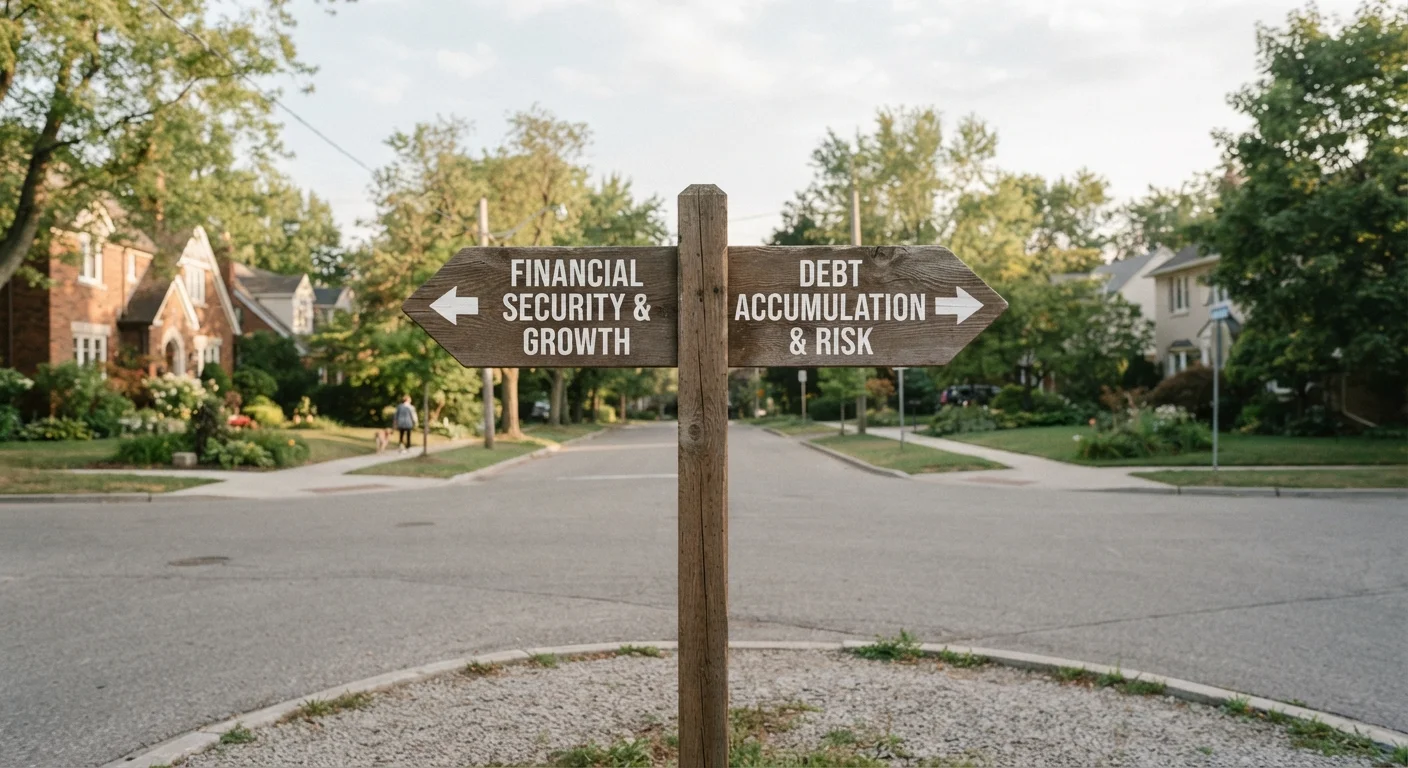
Our Verdict
No single path fits every situation. Debt management plans work best when income is stable but debt feels overwhelming. Settlement makes more sense when accounts are already delinquent and the balance is large enough to negotiate. Bankruptcy is a legal last resort that provides the strongest protection - but at the highest long-term cost to your credit profile. Anyone facing serious debt trouble should get professional guidance before committing to any of these routes.
| Best for | Recommended |
|---|---|
| Those with steady income overwhelmed by high-interest unsecured debt | Debt Management Plan |
| Those with already-delinquent accounts and large balances they cannot repay in full | Debt Settlement |
| Those facing wage garnishment, lawsuits, or debts truly beyond their repayment capacity | Bankruptcy |
Why the Path You Choose Changes Everything
When debt becomes unmanageable, the instinct is often to grab the first solution that sounds like relief. But debt management plans, debt settlement, and bankruptcy are fundamentally different tools - each with its own mechanics, costs, and lasting consequences. Choosing the wrong one can prolong financial stress rather than resolve it.
Before comparing them, it helps to understand what kind of debt you're dealing with. Secured and unsecured debt behave very differently in default, and not every resolution option applies equally to both. Most of these paths address unsecured debt - credit cards, medical bills, and personal loans - rather than mortgages or auto loans.
If you're still in the early stages and haven't yet missed payments, a pre-default decision checklist may be the better starting point.
Debt Management Plans: Structured Repayment With Help
A debt management plan (DMP) is an arrangement set up through a nonprofit credit counseling agency. The agency negotiates with your creditors to reduce interest rates - sometimes significantly - and consolidates your monthly payments into one. You pay the agency; they distribute funds to creditors. You still repay the full principal, just under more favorable terms.
DMPs typically run three to five years. Most require you to close enrolled credit accounts and avoid taking on new credit during the plan. Missing payments can void the negotiated terms, so consistent income is essential.
Look for Nonprofit Credit Counselors First
Before engaging any debt relief service, seek out a nonprofit credit counseling agency approved by the National Foundation for Credit Counseling (NFCC) or the Financial Counseling Association of America (FCAA). These agencies are required to offer education and counseling regardless of whether you enroll in a DMP. Initial consultations are often free or low-cost, and they can help you evaluate whether a DMP, settlement, or bankruptcy makes the most sense for your situation.
The credit impact of a DMP is generally more limited than settlement or bankruptcy. Accounts may be noted as enrolled in a DMP on your credit report, but your payment history - the most influential credit factor - continues to build positively as you pay on time.
For anyone still managing their broader budget, a solid budgeting framework is critical to sustaining a multi-year DMP.
Debt Settlement: Negotiating a Reduced Balance
Debt settlement involves negotiating with creditors to accept a lump-sum payment that is less than the total balance owed - often 40-60% of the outstanding amount. This can happen directly or through a for-profit settlement company.
The catch: to accumulate a lump sum, settlement programs typically instruct you to stop paying creditors and deposit money into a dedicated savings account instead. This deliberate delinquency damages your credit score significantly. Creditors may also sue for unpaid balances before any settlement is reached.
There's also a tax consequence worth noting: the IRS generally treats forgiven debt as taxable income, meaning a settled balance could result in an unexpected tax bill. This is a commonly overlooked risk.
| Debt Management Plan | Debt Settlement | Bankruptcy | |
|---|---|---|---|
| Principal reduced? | No | Yes (partial) | Yes (Chapter 7) or restructured (Chapter 13) |
| Credit impact | Moderate, improves with on-time payments | Significant, accounts go delinquent | Severe, 7-10 years on credit report |
| Typical timeline | 3-5 years | 2-4 years | 3-6 months (Ch. 7) or 3-5 years (Ch. 13) |
| Legal protection from creditors | None | None | Yes, automatic stay upon filing |
| Tax consequences | None | Forgiven debt may be taxable | Generally minimal due to insolvency rules |
| Who administers it | Nonprofit credit counselor | For-profit company or DIY | Federal court and licensed attorney |
Settlement is distinct from consolidation. Debt consolidation combines balances without reducing them - a meaningful difference when evaluating which approach fits your situation.
Bankruptcy: Legal Protection With Lasting Trade-Offs
Bankruptcy is a federal legal process that either eliminates most unsecured debts (Chapter 7) or restructures them into a court-supervised repayment plan (Chapter 13). An automatic stay goes into effect upon filing, immediately halting most collection actions, wage garnishments, and lawsuits.
Chapter 7 requires passing a means test - your income must fall below a certain threshold relative to your state's median. It can discharge eligible debt in as few as three to six months. Chapter 13 takes three to five years but allows filers to keep assets they might lose in Chapter 7.
Bankruptcy stays on your credit report for seven years (Chapter 13) or ten years (Chapter 7). It can affect employment in certain fields, housing applications, and the ability to obtain future credit. For those still building their understanding of how credit works, the long-term credit impact is worth fully internalizing before filing.
Filing requires working with a licensed bankruptcy attorney. Costs include legal fees and court fees, though some Chapter 7 filers qualify for fee waivers.
Which Path Fits Your Situation?
The right answer depends on three core variables: how much you owe, your current income stability, and how far into delinquency your accounts already are.
- DMP: Best if you have steady income, primarily unsecured debt, and want to repay in full at reduced interest without long-term credit damage.
- Settlement: Worth considering when balances are large, accounts are already delinquent, and you can accumulate a lump sum - but go in clear-eyed about the tax implications and credit impact.
- Bankruptcy: Appropriate when debt is genuinely unrepayable, legal action has started, or other paths have been exhausted. It offers the strongest protection but the most significant long-term consequences.
It's also worth considering whether a structured self-directed payoff strategy might resolve your debt before formal intervention is necessary.
This article is for general informational purposes only and does not constitute legal, financial, or tax advice. Debt relief decisions involve complex legal and financial considerations. Consult a licensed attorney, certified financial counselor, or tax professional before pursuing any formal debt resolution path.
The content provided on our blog site traverses numerous categories, offering readers valuable and practical information. Readers can use the editorial team’s research and data to gain more insights into their topics of interest. However, they are requested not to treat the articles as conclusive. The website team cannot be held responsible for differences in data or inaccuracies found across other platforms. Please also note that the site might also miss out on various schemes and offers available that the readers may find more beneficial than the ones we cover.