

Willpower Is the Wrong Tool for the Job
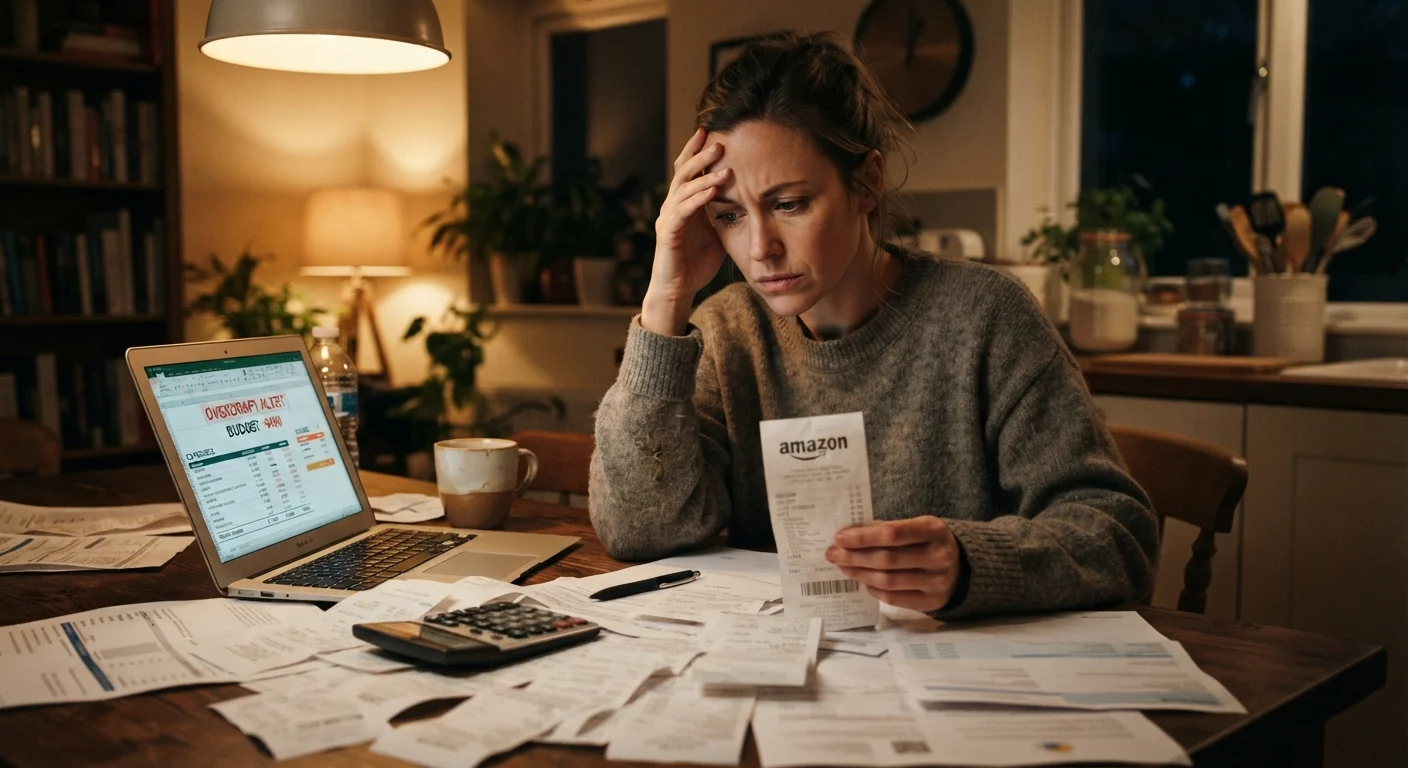
Most budgeting advice is built on a flawed assumption: that spending too much is a self-control problem. Fix the discipline, fix the budget. But decades of research in behavioral economics tell a different story. Willpower is a finite, depletable resource - and it's competing with dozens of other demands on your mental energy every day.
By the time an impulse purchase presents itself - tired after work, stressed by a rough week, one click away on your phone - you may have already spent most of your self-regulatory capacity. That's not weakness. That's how human cognition works.
The more effective approach is to stop treating budgeting as a daily willpower exercise and start treating it as a system design problem. Instead of asking "Can I resist this?" ask "How do I make the wrong choice harder and the right choice automatic?"
Automating your savings is one of the most direct applications of this principle - removing the decision entirely so good financial behavior happens by default.
The Biases Quietly Running Your Wallet
Several well-documented cognitive biases shape spending in ways most people don't notice in the moment.
~47%
Americans who say they spend more than intended regularly
Surveys conducted by financial research organizations consistently find roughly half of U.S. adults report difficulty sticking to a spending plan, suggesting the challenge is widespread rather than individual.
Up to 95%
Of purchasing decisions driven by non-conscious factors
Research in consumer psychology, including work cited by the Harvard Business Review, suggests the vast majority of purchase decisions involve emotional and habitual processing rather than deliberate rational analysis.
18%
More spent when paying by card vs. cash
Multiple consumer behavior studies have found that the abstract nature of card and digital payments tends to increase spending amounts compared to equivalent cash transactions.
Present bias causes people to overweight immediate rewards over future ones. This is why a $12 lunch feels fine today even when you know it conflicts with a savings goal. The future version of you feels abstract; the sandwich is real and in front of you.
Mental accounting leads people to treat money differently based on its source or label. A tax refund gets spent freely; the same amount from a paycheck gets protected carefully. Rationally, a dollar is a dollar - but brains don't process them equally.
The denomination effect shows people spend small bills and loose change more readily than larger denominations, even when the total is identical. Digital payments amplify this: when you don't see physical cash leave your hand, the psychological cost of spending drops.
Hedonic adaptation means spending upgrades - a nicer apartment, a newer car - quickly become the new normal, and the satisfaction fades. This creates a cycle where bigger purchases are needed to produce the same emotional lift.
Environment Shapes Spending More Than Intentions Do
Your spending environment - the apps on your phone, the saved payment details in your browser, the location of your debit card relative to your front door - is doing more work than your budget spreadsheet. Behavioral researchers consistently find that small environmental changes produce more lasting behavior shifts than motivation-based interventions.
Friction matters enormously. Removing a saved credit card from a shopping app, for instance, adds just enough pause to interrupt automatic purchasing. Conversely, low friction - one-click purchasing, same-day delivery, pre-loaded payment methods - removes the natural hesitation that used to exist between wanting something and having it.
Add Friction to Impulse Spending
Remove saved payment methods from retail websites and apps you use for discretionary shopping. The extra 30 seconds to re-enter card details is often enough to interrupt an automatic purchase. Small barriers consistently outperform large amounts of willpower.
This is also why social environments drive spending. Dining with people who order expensive items, browsing social media that signals certain lifestyles, or shopping during emotionally charged moments all shift behavior predictably. None of these situations are about discipline failures - they're inputs your brain responds to automatically.
Designing your environment for better defaults is the practical translation of all this. That might mean unsubscribing from retail emails, deleting shopping apps from your home screen, or keeping a spending buffer account that requires an extra transfer step before you can access it.
Building a Budget That Works With Your Brain
The goal isn't to think your way into perfect financial behavior - it's to build a structure that makes reasonable financial behavior the path of least resistance.
A few principles that apply regardless of which budgeting method you choose:
- Name your spending categories explicitly. Vague categories like "miscellaneous" become catch-alls. Specific labels - "work lunches," "streaming subscriptions," "clothing" - make spending visible and easier to evaluate honestly.
- Use a cooling-off rule for non-essential purchases. A 24- or 48-hour waiting period on purchases above a set dollar threshold short-circuits present bias without requiring permanent denial.
- Separate your savings before you see them. Money that never hits your checking account doesn't feel available to spend. Even a small automatic transfer on payday builds this habit.
- Match your budget format to your actual habits. If you hate spreadsheets, a simple envelope system or a budgeting app may work better. The best budget is the one you'll realistically maintain.
If you're building from scratch, this foundational budgeting guide covers each step in plain language. For help finding the right structure, comparing common budgeting frameworks can help you match an approach to your actual lifestyle.
This article is for general informational and educational purposes only and does not constitute personalized financial advice. Consider consulting a qualified financial professional for guidance tailored to your specific situation.
Frequently Asked Questions
Knowing your budget and sticking to it are two different cognitive tasks. In-the-moment spending decisions are often driven by emotion, habit, or environmental cues rather than rational calculation. Identifying which triggers affect you most - stress, social situations, convenience - lets you design practical barriers before those moments arrive.
Present bias is the tendency to overvalue immediate rewards compared to future ones. It explains why a purchase feels compelling right now even when you know it conflicts with a longer-term goal. Strategies like waiting periods or automatic savings transfers help counteract this tendency.
Yes - and the difference is often situational, not moral. Irregular income, high financial stress, or a history of scarcity can all intensify spending impulses. Recognizing these factors removes self-blame and allows you to build systems that account for your specific circumstances.
Focus on structural changes: automate savings transfers, use separate accounts for different spending categories, reduce friction for saving, and increase friction for impulsive purchases. Systems that make the right choice the default choice require far less conscious effort to maintain.
Mental accounting refers to the way people categorize money differently depending on its source or intended use - often irrationally. For example, treating a tax refund as 'free money' while carefully guarding regular paycheck dollars. A dollar is a dollar regardless of where it came from.
The content provided on our blog site traverses numerous categories, offering readers valuable and practical information. Readers can use the editorial team’s research and data to gain more insights into their topics of interest. However, they are requested not to treat the articles as conclusive. The website team cannot be held responsible for differences in data or inaccuracies found across other platforms. Please also note that the site might also miss out on various schemes and offers available that the readers may find more beneficial than the ones we cover.