

Our Verdict
Each ground transportation mode serves a different traveler profile. Public transit and shared shuttles favor budget-conscious travelers with light bags and flexible schedules. Rideshares balance convenience and moderate cost for most trips. Rental cars earn their keep only when you need wheels throughout the destination - not just for the airport leg.
| Best for | Recommended |
|---|---|
| Solo travelers on a tight budget | Public transit or shared shuttle |
| Groups of three or more splitting costs | Rideshare or taxi |
| Travelers needing a vehicle throughout their stay | Rental car |
| Travelers with heavy luggage or mobility needs | Pre-booked private car or hotel shuttle |
Why the Airport-to-Destination Leg Deserves Real Planning
Ground transportation is one of the most overlooked line items when building a travel budget. Travelers spend hours comparing flight prices but often make the airport-to-hotel decision in the arrivals hall - tired, rushed, and without context on local options. That reactive approach routinely adds $30 to $80 or more to a trip, often unnecessarily.
The right choice depends on four variables: the distance from the airport to your destination, how much luggage you're carrying, how many people are in your party, and whether you'll need a vehicle once you arrive. Run those four factors before you land, not after. For a broader look at how airport transport fits into your total spending plan, see how to build a realistic travel budget before you book anything.
Comparing Your Core Options
Here's how the five most common ground transport modes stack up across the criteria that matter most to everyday travelers.
| Public Transit | Shared Shuttle | Rideshare/App | Taxi | Rental Car | |
|---|---|---|---|---|---|
| Typical cost (solo traveler) | $2-$10 | $15-$30 | $25-$60+ | $30-$70+ | $40-$90+/day |
| Cost for group of 3-4 | Low per person | Moderate per person | Split evenly, good value | Split evenly, competitive | High fixed cost |
| Luggage handling | Difficult with many bags | Assisted loading | Driver assists | Driver assists | Full control |
| Predictability of timing | High (fixed schedule) | Low (multiple stops) | Moderate (traffic-dependent) | Moderate | High (self-driven) |
| Surge/peak pricing risk | None | None | High | Low-moderate | Seasonal variation |
| Best scenario | Light bags, budget priority | Solo traveler, hotel corridor | Small group, moderate budget | Flat-rate cities, no app | Multi-day driving needed |
A few nuances the table can't fully capture: rideshare surge pricing during peak hours or bad weather can push fares well above the typical range shown. Rental car costs also vary sharply by city - daily rates in markets like New York or San Francisco are typically higher than in mid-sized metro areas, and parking costs at urban hotels can rival the rental itself.
Shared shuttles - the van-style services that consolidate multiple passengers heading in the same general direction - sit between rideshares and public transit on both price and convenience. They're worth pre-booking online when available, since walk-up rates at the curb are often higher. Solo travelers heading to a hotel corridor (near a convention center or theme park, for example) tend to get the most value from this option.
Pre-Book Shuttles and Off-Peak Rideshares
Shared shuttle services at many major airports allow advance reservations online, often at a lower rate than walk-up pricing. If your flight arrives during a known peak window - Friday evenings, Sunday afternoons, major holiday weekends - consider scheduling your rideshare pickup request the moment you land rather than waiting until you reach the curb. A few minutes of patience inside the terminal can mean the difference between base pricing and surge pricing.
When Public Transit Is the Smart Move - and When It Isn't
Airports with direct rail connections to city centers - think Chicago O'Hare, Washington Dulles via the Silver Line, Atlanta Hartsfield-Jackson, and New York's JFK via the AirTrain - make public transit genuinely competitive on time, not just cost. On a flat-rate rail link, you bypass traffic entirely and often arrive downtown faster than a rideshare during rush hour.
The calculus shifts when you have oversized luggage, traveling with young children, or heading to a destination not well-served by transit. Carrying two checked bags on a crowded subway during rush hour is a real logistical challenge, not just a mild inconvenience. Verify the specific airport's transit connections in advance - the gap between airports with direct rail and those served only by multi-transfer bus routes is enormous. Always confirm current schedules and fares directly with the transit authority before your trip, as service and pricing can change.
Rideshares and Taxis: Convenience Has a Variable Price
Rideshare apps have largely displaced traditional taxi queues at most major U.S. airports, though regulated taxis remain available and sometimes offer a flat rate to popular destinations - a meaningful advantage when demand is high and surge pricing kicks in. Check whether your destination airport publishes flat taxi fares to the city center; some do, and they provide cost certainty that an app cannot.
For groups of three or four passengers, a rideshare often costs less per person than transit when you factor in luggage and transfer complexity. The dynamic pricing model is the main risk: an unexpected delay - a late flight, long customs line - can push you into a high-demand window. If flexibility allows, waiting 20 to 30 minutes for demand to ease can reduce fares noticeably.
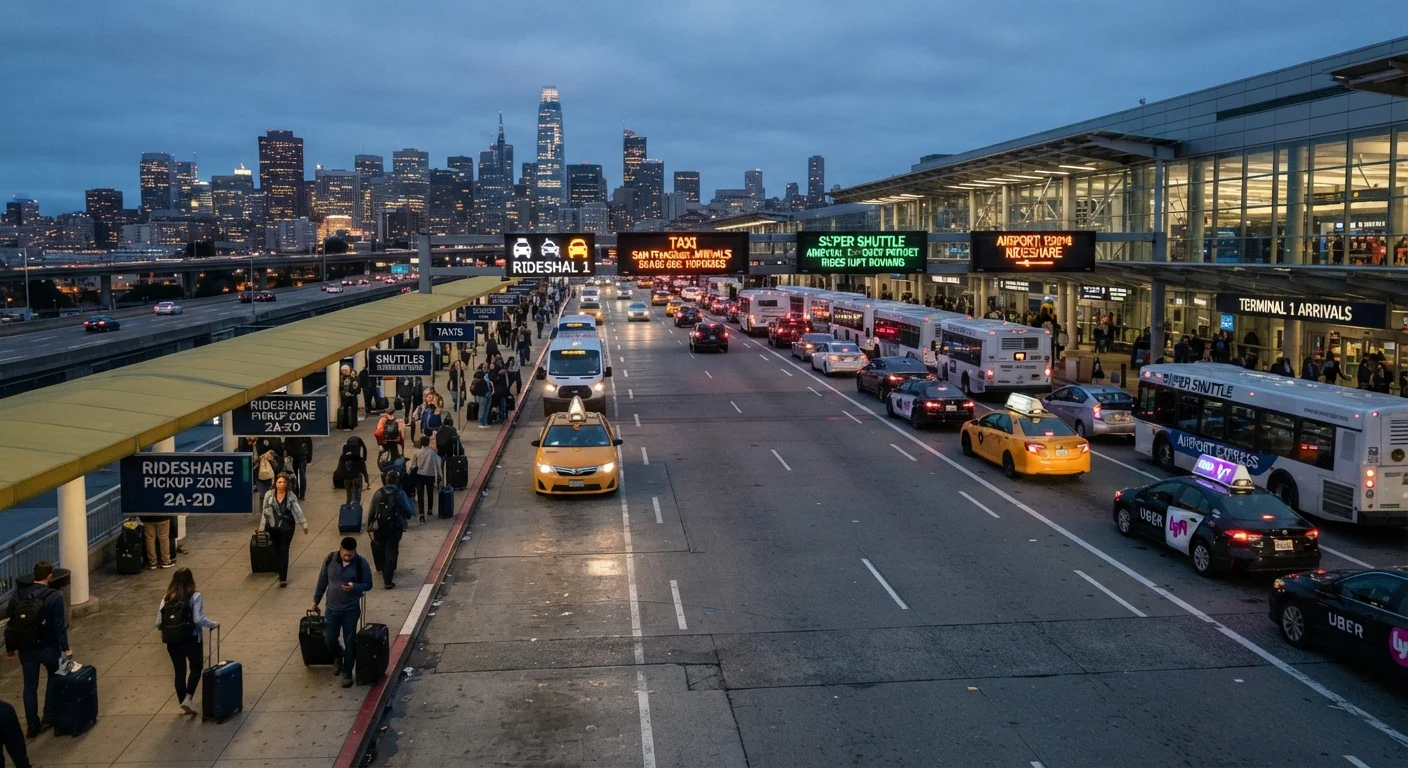
Airport-specific rideshare pickup logistics vary significantly. Many large airports have consolidated pickup zones - sometimes a separate garage floor or a remote lot - that add 10 to 15 minutes of walking. Know the pickup location before your driver confirms, not after.
Rental Cars: Right Tool, Wrong Job for Many Trips
Renting a car solely to get from the airport to your hotel and back is rarely cost-effective once you add daily rates, taxes, airport surcharges, fuel, and destination parking. Those fees can compound quickly in urban markets. However, if you plan to drive during your stay - day trips, visiting multiple neighborhoods, or traveling in a region with limited transit - a rental earns its cost by eliminating multiple rideshare rides.
For a household evaluating whether it makes sense to rely on a single vehicle for all travel needs, the financial trade-offs of one vs. two cars article offers a useful framework that applies beyond the home driveway. Airport rental desks also add convenience fees above what off-airport rental locations charge - if schedule allows, taking a short transit ride to an off-airport location can reduce the total cost, though confirm logistics carefully before banking on this approach.
Finally, don't overlook the hidden costs that surround ground transport - from baggage fees that affect how you pack to tipping norms for drivers. The hidden costs travelers routinely underestimate covers expenses that quietly inflate what you thought was a fixed-cost leg of your trip.
The content provided on our blog site traverses numerous categories, offering readers valuable and practical information. Readers can use the editorial team’s research and data to gain more insights into their topics of interest. However, they are requested not to treat the articles as conclusive. The website team cannot be held responsible for differences in data or inaccuracies found across other platforms. Please also note that the site might also miss out on various schemes and offers available that the readers may find more beneficial than the ones we cover.