

Good Behavior Starts Before the Cue
Most pet owners think of training as something that happens during a dedicated session - cues given, treats dispensed, behaviors marked. But a great deal of what shapes how a pet behaves day-to-day happens outside those sessions entirely. Enrichment activities, when thoughtfully structured, create the mental and physical conditions in which good behavior becomes the natural default.
The underlying principle is straightforward: animals that have their cognitive and physical needs met are far less likely to engage in destructive, anxious, or impulsive behavior. As explored in our article on why enrichment is as essential as food and water, boredom and under-stimulation are among the most common drivers of unwanted conduct in domestic pets. The activities below don't replace structured training sessions - they make those sessions more effective by producing a calmer, more engaged animal.
Puzzle Feeders and Food-Dispensing Toys
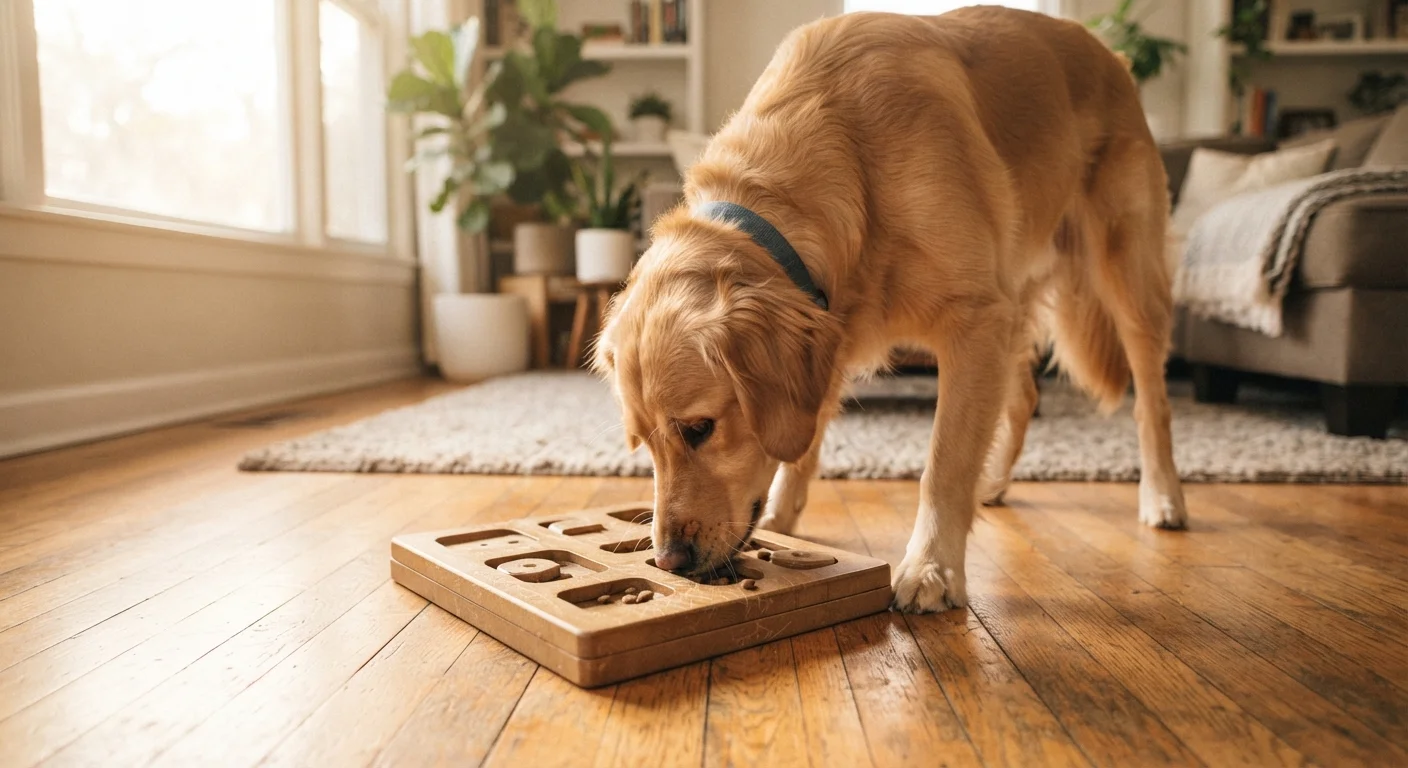
Replacing a portion of your pet's daily meal with a puzzle feeder or food-dispensing toy requires them to problem-solve before eating. This slows consumption, reduces post-meal restlessness, and rewards persistence - a behavioral trait closely aligned with impulse control. For dogs, rubber fillable toys or sliding-panel puzzles work well. For cats, ball-track feeders and foraging mats replicate the hunting sequence their instincts are wired for. Start with a difficulty level your pet can solve within a few minutes and increase complexity gradually so frustration doesn't set in.
Puzzle feeders reward persistence and build impulse control without a single formal command.
Structured Sniff Walks
A sniff walk is distinct from a standard exercise walk: the pet sets the pace and chooses where to stop and investigate. Research in animal cognition consistently shows that olfactory exploration is deeply tiring for dogs - far more so than the same distance covered at a trot. Sniff walks reduce post-walk arousal, which directly correlates with calmer in-home behavior. Use a longer leash when safe and simply follow your dog's nose. Even 15 minutes of unstructured sniffing can produce a visibly more settled animal afterward.
Fifteen minutes of unstructured sniffing can produce calmer, more settled behavior than a brisk exercise walk.
Nose Work and Scent Games at Home
Informal scent games - hiding small treats or a favorite toy in different rooms or under overturned cups - tap directly into a pet's primary sensory system and create a calm, focused state sometimes called a "scent trance." This activity is particularly useful for anxious or reactive animals because sustained sniffing activates the parasympathetic nervous system, promoting relaxation. Begin with easy hides your pet can succeed at quickly, then increase the number of hides and complexity of concealment. The principles of operant conditioning explain why every successful find quietly reinforces the seeking behavior you want.
Sustained sniffing activates the parasympathetic nervous system, naturally promoting relaxation and focus.
Structured Play Sessions with Clear Beginnings and Ends
Unstructured, owner-initiated play that ends abruptly teaches pets that arousal has no predictable off-switch. Instead, give play a ritual start - a specific phrase or the appearance of a dedicated toy - and an equally clear ending, such as placing the toy out of sight and asking for a calm sit before walking away. Over time, this structure teaches emotional regulation: the pet learns that high energy states have natural, safe conclusions. Interactive wand toys for cats and tug or fetch for dogs both work well within this framework, provided the stopping ritual is applied consistently.
A clear ritual ending to play teaches pets that high arousal has a predictable, safe conclusion.
Environmental Rotation and Novel Object Exploration
Introducing safe, novel objects into your pet's environment - a cardboard box, a crinkled paper bag, a new texture on the floor - invites investigative behavior without requiring owner direction. Exploration of novel stimuli in a secure setting builds confidence and reduces the startle responses that often precede reactive behavior. Rotate objects every few days to maintain novelty. For cats, vertical space additions (a new perch or rearranged furniture) serve the same function. For dogs, even carrying them to a new-smelling park bench area counts. The goal is low-stakes novelty your pet can engage with at their own pace.
Low-stakes novelty exploration builds confidence and reduces the startle responses behind reactive behavior.
Calm Settle Training Through Relaxation Protocols
While not a formal obedience exercise, gradually teaching a pet to settle on a designated mat or bed - simply by rewarding calm, relaxed body postures whenever they occur there - embeds a default resting behavior into daily life. Owners can scatter small food rewards on the mat during quiet moments, reinforcing the location as associated with calm. Over weeks, many pets begin voluntarily retreating to the mat when the household activity level rises. This is enrichment in its subtlest form: shaping an environment that makes good choices easy and natural, rather than demanding them through command.
Rewarding calm postures in a designated spot gradually makes relaxation the pet's default response to stress.
Making Enrichment Work for Your Household
None of these activities require specialized equipment or hours of setup. The most important variable is consistency: enrichment delivered irregularly produces irregular results. Aim to rotate two or three activities across the week so the novelty stays high and the cognitive demand stays appropriate to your pet's current skill level.
Rotate Activities to Sustain Engagement
Offering the same enrichment activity daily reduces its stimulating effect as pets habituate to the challenge. Keep a simple weekly rotation of two or three different activities to maintain novelty and motivation. Even small variations - a new hiding location, a different food texture in the feeder - are enough to keep cognitive engagement high without requiring significant extra effort from owners.
It's also worth noting that enrichment and reward-based training share the same behavioral foundation. Understanding how positive reinforcement shapes behavior helps owners recognize the micro-moments of reinforcement embedded in every enrichment session - even when no formal cue has been given. If progress stalls despite consistent enrichment, our guide on navigating training plateaus can help identify what's getting in the way.
This article is for general informational purposes only. For persistent behavioral concerns or signs of anxiety or distress in your pet, consult a qualified veterinarian or certified animal behaviorist.
The content provided on our blog site traverses numerous categories, offering readers valuable and practical information. Readers can use the editorial team’s research and data to gain more insights into their topics of interest. However, they are requested not to treat the articles as conclusive. The website team cannot be held responsible for differences in data or inaccuracies found across other platforms. Please also note that the site might also miss out on various schemes and offers available that the readers may find more beneficial than the ones we cover.