

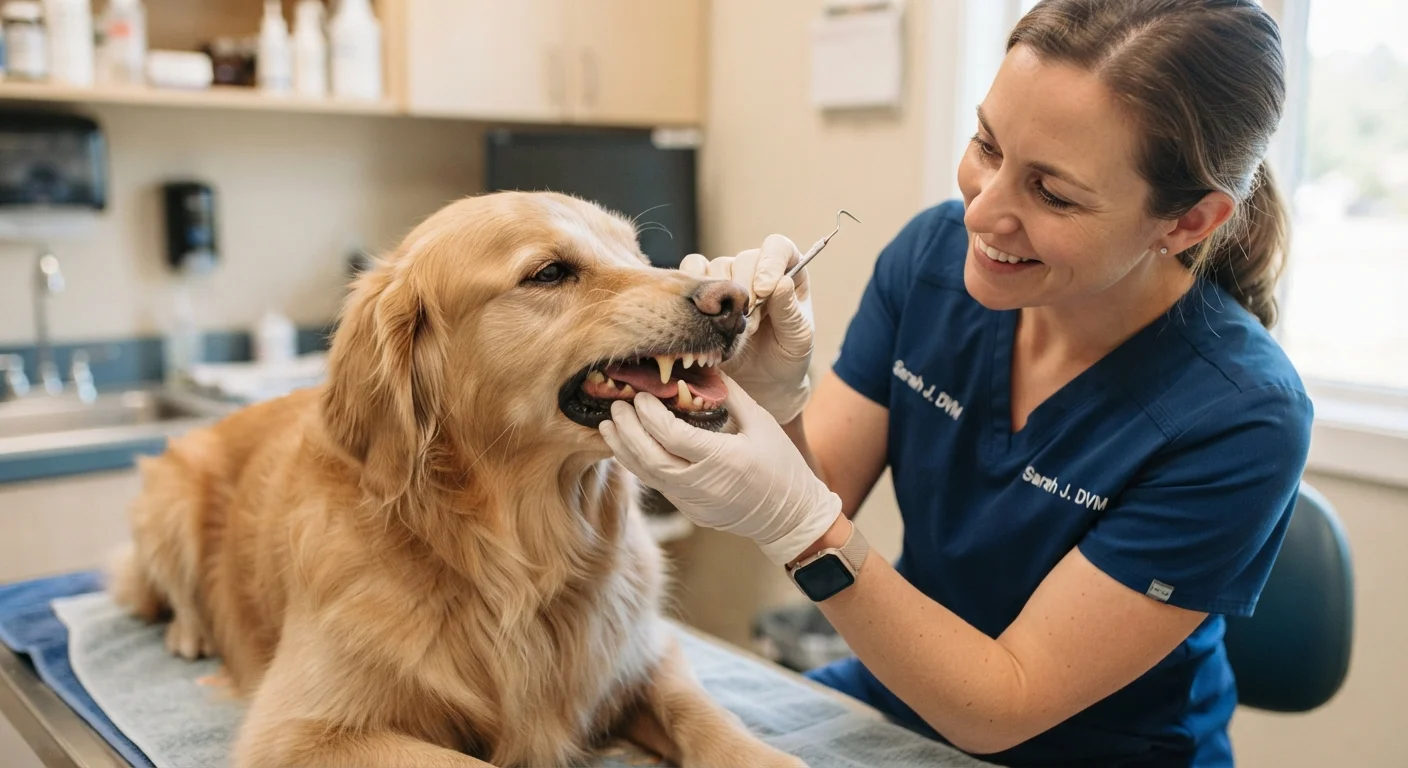
Why Dental Disease Flies Under the Radar
Dental disease is one of the most common health conditions seen in companion animals - yet it's also one of the most consistently overlooked by owners. The reason is straightforward: pets don't complain about tooth pain the way humans do. In the wild, showing vulnerability is a survival disadvantage, so animals instinctively mask discomfort. That instinct doesn't disappear in domestic settings.
Veterinary organizations estimate that the majority of dogs and cats show some evidence of periodontal disease - a progressive infection of the structures supporting the teeth - by the time they reach age three. Periodontal disease begins with plaque, a sticky bacterial film that accumulates on tooth surfaces. When plaque mineralizes into tartar (also called calculus), it creates a rough surface that accelerates further bacterial buildup, particularly below the gumline where brushing can't reach.
Because the progression is gradual and pets rarely vocalize pain, owners often don't notice a problem until the disease is well advanced. This is why subtle behavioral cues - like reduced interest in hard food, excessive drooling, or pawing at the face - are worth taking seriously.
How Dental Disease Progresses and What It Can Do
Dental disease is staged from Grade 1 (early gingivitis with reversible inflammation) through Grade 4 (severe bone loss, tooth root exposure, and potential tooth loss). Most owners present pets for care at Grade 2 or higher, when damage below the gumline has already begun.
~80%
Dogs showing dental disease signs by age 3
Veterinary dental specialists commonly cite this figure based on clinical examination data across small animal practice populations.
70%+
Cats with periodontal disease by age 3
Feline periodontal disease rates are similarly high, with cats also prone to a distinct condition called tooth resorption that adds further risk.
Beyond the mouth, research has suggested links between chronic periodontal disease and systemic conditions affecting the heart, kidneys, and liver - though the directionality of those relationships is still being studied. What is clear is that a chronically infected mouth represents an ongoing bacterial burden on the body, particularly in older animals. Senior pets face compounded risk, as age-related immune changes can reduce the body's ability to contain oral infections.
Like pet obesity - another condition that often progresses quietly - dental disease tends to be identified late precisely because the early stages produce no dramatic symptoms.
Best Practices for Preventing and Managing Dental Disease
Prevention is substantially more effective - and less costly - than treating advanced disease. The following practices reflect current veterinary guidance and are appropriate for most dogs and cats, though individual needs vary. Always consult your veterinarian before starting any new dental care routine, especially for pets with existing health conditions.
Brush your pet's teeth daily using a pet-safe toothpaste.
Daily mechanical removal of plaque is the single most effective way to slow tartar buildup and prevent gingivitis. Human toothpaste contains ingredients toxic to pets - fluoride and xylitol among them - so only formulations approved for animal use should be applied. Consistency matters more than technique; even a brief, gentle session is beneficial.
Schedule professional veterinary dental cleanings as recommended.
At-home brushing addresses above-gumline plaque but cannot clean subgingival (below the gumline) surfaces where periodontal disease originates. Professional cleanings performed under general anesthesia allow full mouth examination, dental X-rays, scaling, and polishing. Anesthesia is necessary for thorough, safe access and is routinely used even in healthy patients.
Learn to recognize early warning signs and act on them promptly.
Because pets mask pain, owners must become active observers. Persistent bad breath, changes in chewing habits, food dropping, one-sided eating, and sudden disinterest in previously enjoyed chews or toys are all worth reporting to a veterinarian. Early intervention at Grade 1 or 2 disease is far more likely to preserve teeth and tissue.
Use veterinarian-accepted dental supplements as adjuncts - not replacements.
Products such as water additives, dental chews, and enzyme-based gels can support oral hygiene between brushings, but none replicate the mechanical action of brushing or the thoroughness of a professional cleaning. Look for products that carry recognition from relevant veterinary dental organizations, indicating they have been evaluated for efficacy.
Start dental handling early and build tolerance gradually in younger animals.
Puppies and kittens that are accustomed to having their mouths touched tolerate brushing far more readily as adults. Gradual desensitization - starting with finger touches on the lips, progressing to gum contact, then to a soft brush - establishes cooperation that makes lifelong dental care feasible.
Getting Started: Quick Actions for Dental Health
If you're not currently doing anything for your pet's dental health, starting is simpler than most owners expect. The goal is consistency over perfection.
When preparing for your next veterinary appointment, noting any changes in eating behavior, breath odor, or chewing habits is genuinely useful information. Our pre-appointment checklist can help you organize what to bring and what to mention. Dental care is also a core component of responsible pet ownership more broadly - it belongs alongside vaccination, parasite control, and nutrition as a non-negotiable part of your pet's wellness routine.
This article is for general informational and educational purposes only and does not constitute veterinary medical advice. Always consult a licensed veterinarian for guidance specific to your pet's health needs.
The content provided on our blog site traverses numerous categories, offering readers valuable and practical information. Readers can use the editorial team’s research and data to gain more insights into their topics of interest. However, they are requested not to treat the articles as conclusive. The website team cannot be held responsible for differences in data or inaccuracies found across other platforms. Please also note that the site might also miss out on various schemes and offers available that the readers may find more beneficial than the ones we cover.