

Our Verdict
Animal proteins offer the most complete amino acid profiles and high digestibility, but well-planned plant-based combinations can meet protein needs effectively. Hybrid approaches - including eggs, dairy, legumes, and occasional meat - give many Americans a practical middle ground that balances nutrition, budget, and personal values.
| Best for | Recommended |
|---|---|
| Those prioritizing complete amino acid profiles with minimal planning | Animal proteins (eggs, poultry, fish, dairy) |
| Those seeking cost-effective, heart-healthy protein with flexibility | Legumes and whole plant sources |
| Those wanting versatility and moderate environmental impact | Mixed approach (plant + dairy/eggs) |
| Those with specific digestive or health considerations | Consult a registered dietitian for personalized guidance |
What Makes a Protein 'Complete' or 'Incomplete'?
Protein is made up of amino acids - the body can produce some on its own, but nine are considered essential, meaning they must come from food. Understanding this distinction is the foundation of any protein comparison. If you'd like a plain-language primer on key nutrition terms, see our guide to everyday nutrition vocabulary.
A complete protein contains all nine essential amino acids in proportions sufficient for human needs. An incomplete protein is low in one or more of them. This doesn't make incomplete proteins worthless - it just means thoughtful combination matters when they form the bulk of your intake.
Scientists assess protein quality using metrics such as the Digestible Indispensable Amino Acid Score (DIAAS), which accounts for both amino acid content and how well the gut absorbs those amino acids. Higher DIAAS scores indicate the body can make more efficient use of the protein provided.
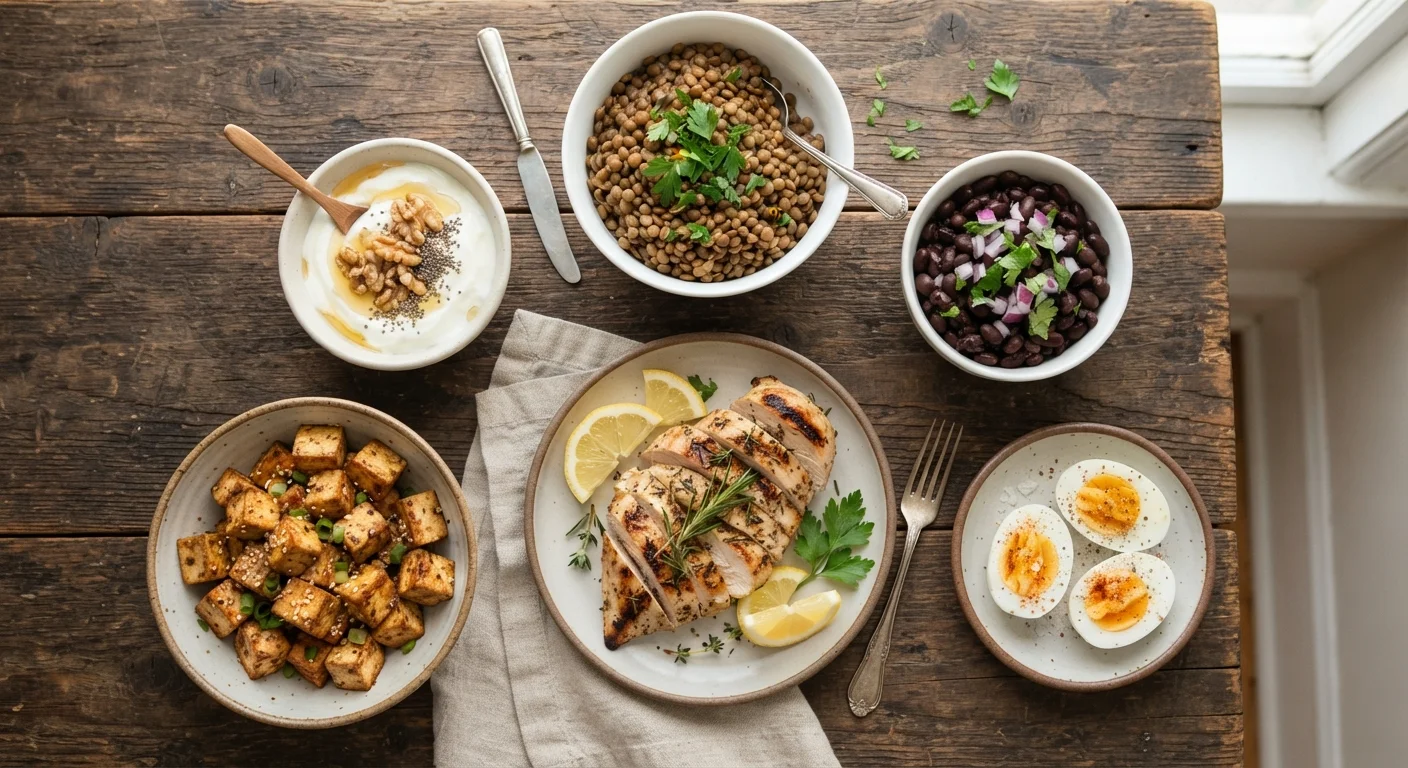
| Eggs | Chicken Breast | Lentils | Tofu | Greek Yogurt | Black Beans | |
|---|---|---|---|---|---|---|
| Complete protein? | Yes | Yes | No (low methionine) | Yes | Yes | No (low methionine) |
| Approx. protein per 100g | 13g | 31g | 9g (cooked) | 8g | 10g | 8g (cooked) |
| Digestibility (DIAAS) | High | High | Moderate | Moderate-High | High | Moderate |
| Saturated fat | Moderate | Low | Negligible | Low | Low-Moderate | Negligible |
| Fiber content | None | None | High | Low | None | High |
| Relative cost (US) | Low | Moderate | Low | Low-Moderate | Moderate | Low |
| Suitable for plant-based diets? | Vegetarian | No | Yes | Yes | Vegetarian | Yes |
Animal Proteins: Strengths and Trade-Offs
Meat, poultry, fish, eggs, and dairy all score as complete proteins with high digestibility. Eggs are often cited by nutrition researchers as a near-reference-standard protein, while fish adds heart-healthy omega-3 fatty acids alongside high-quality protein. Dairy offers protein alongside calcium and other micronutrients, and Greek yogurt in particular delivers a concentrated dose per serving.
The trade-offs are real. Red and processed meats have been associated in large observational studies with increased risk of certain chronic diseases when consumed in high amounts. Saturated fat content varies significantly across animal foods - fatty red meat differs meaningfully from skinless poultry or white fish. Cost also varies: eggs remain one of the most affordable complete protein options, while some fish can be expensive.
Processed Meat Is a Distinct Category
Nutrition research treats fresh, minimally processed meat and processed meat (bacon, deli meats, sausage) as separate categories with different health associations. Processed meats have been classified by international health bodies as carrying higher risk with frequent consumption. Keeping processed meat as an occasional rather than daily choice is consistent with widely recommended dietary patterns. For more on how processing levels affect food quality, see our breakdown of whole vs. processed foods.
Plant Proteins: What the Science Actually Shows
Legumes (lentils, black beans, chickpeas), soy foods (tofu, tempeh, edamame), whole grains, nuts, and seeds all contribute meaningful protein. Soy stands out as a plant source with a complete amino acid profile and a DIAAS comparable to many animal foods. Legumes are high in lysine but lower in methionine; grains and seeds tend to be the reverse - making them natural complements.
The old rule that plant proteins must be combined at every meal has been largely revised. Nutrition research indicates that eating a variety of plant proteins across the day - not necessarily at every meal - is sufficient to meet essential amino acid needs for most healthy adults. Overall dietary patterns matter more than precise meal-by-meal pairing. For a deeper look at how diverse eating patterns compare nutritionally, see our overview of global eating patterns and nutrition research.
Plant proteins also come packaged with fiber, phytonutrients, and generally lower saturated fat - factors relevant to long-term cardiovascular and metabolic health.
~0.8g/kg
Daily protein RDA for average adults
The U.S. Dietary Reference Intake sets the Recommended Dietary Allowance for protein at approximately 0.8 grams per kilogram of body weight per day for sedentary adults.
~70%
Share of US protein from animal sources
According to USDA dietary data, a majority of protein consumed by Americans comes from animal-based foods, though plant-based intake has been growing steadily.
1.0
DIAAS score for whole egg protein
Research published in nutrition journals has placed whole egg at or near a DIAAS of 1.0, making it a benchmark reference protein in scientific comparisons.
The Middle Ground: Hybrid Approaches and Practical Choices
Many Americans already eat a hybrid diet without labeling it as such - chicken a few nights a week, beans in soups, cheese on salads, and eggs at breakfast. From a nutritional standpoint, this kind of varied pattern naturally distributes protein quality across sources and reduces over-reliance on any single food category.
For those reducing but not eliminating animal products, dairy and eggs offer complete protein with a lower environmental footprint than beef. For those moving toward predominantly plant-based eating, soy-based foods, lentils, and quinoa (another complete plant protein) can anchor meals effectively.
Cost and accessibility also shape realistic choices. Canned beans and lentils are among the most affordable protein options available. Tofu and eggs sit in a mid-range price point. Fresh fish and lean cuts of meat can be costlier. Understanding the full spectrum of protein foods helps most households find a workable, nutritious approach without overhauling their budget. For a broader starting point on building a nutritious diet, this introduction to everyday nutrition provides helpful context.
This article is for general informational and educational purposes only and is not a substitute for personalized medical or dietary advice. Please consult a registered dietitian or qualified healthcare provider for guidance suited to your individual health needs.
The content provided on our blog site traverses numerous categories, offering readers valuable and practical information. Readers can use the editorial team’s research and data to gain more insights into their topics of interest. However, they are requested not to treat the articles as conclusive. The website team cannot be held responsible for differences in data or inaccuracies found across other platforms. Please also note that the site might also miss out on various schemes and offers available that the readers may find more beneficial than the ones we cover.