

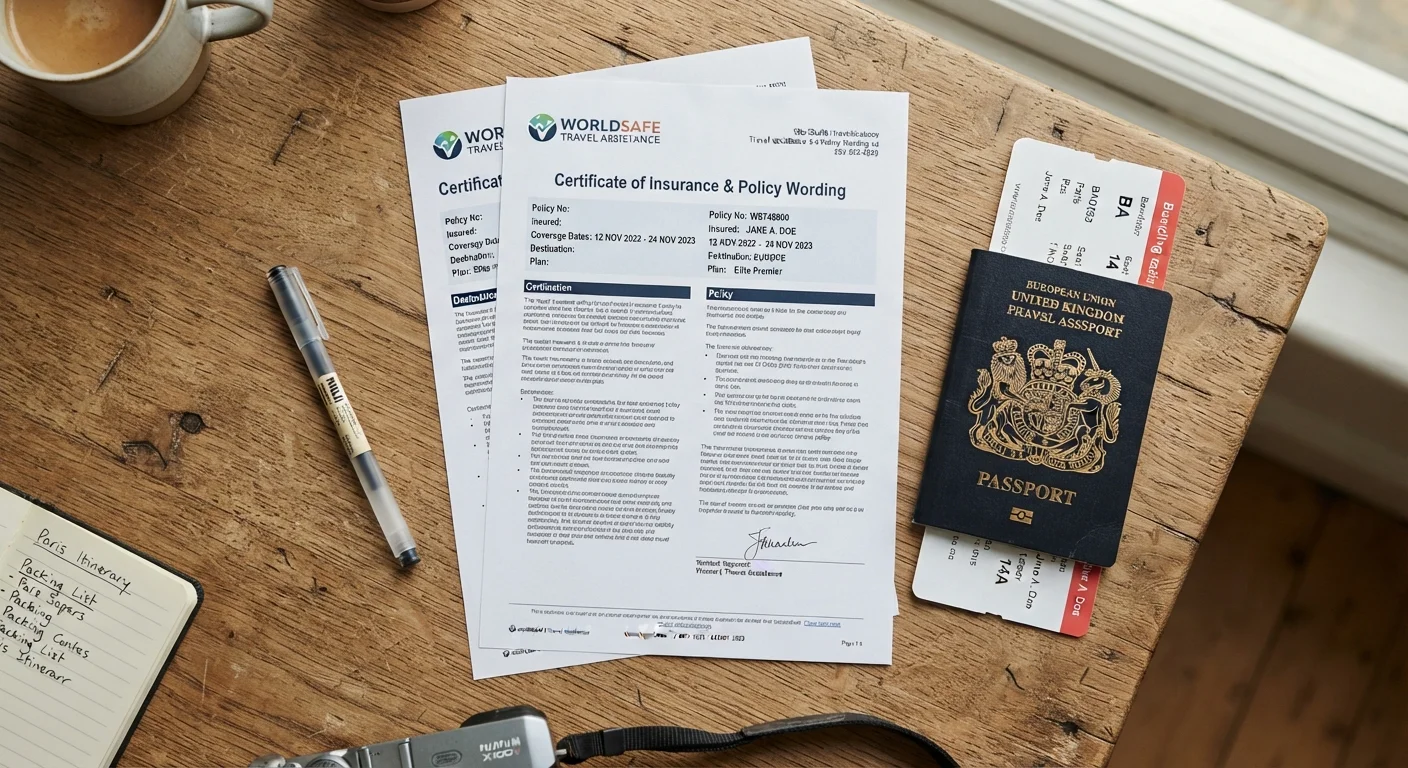
One Policy, Many Moving Parts
Travel insurance is sold as a single product, but it's really a bundle of distinct coverages, each operating under its own terms. Trip cancellation, trip interruption, emergency medical, medical evacuation, baggage loss, and travel delay are common components - but they don't all work the same way, and not every policy includes every type.
That bundling creates a common misunderstanding: travelers assume that buying a policy means they're covered for whatever goes wrong. In practice, what's covered depends on the specific covered reasons listed in the policy, the dollar limits assigned to each benefit, and any exclusions buried in the definitions section. See what standard policies typically include and exclude for a plain-language breakdown of the most common coverage types.
~$700
Average cost of a travel insurance policy per trip
U.S. Travel Insurance Association data suggests per-trip premiums vary widely based on trip cost, traveler age, and coverage selected - with comprehensive policies for longer or costlier trips often running higher.
$100K+
Potential medical evacuation cost from remote locations
Industry sources, including the U.S. Department of State's travel resources, note that emergency medical evacuation from overseas can reach six figures depending on location and required level of care.
60-180 days
Typical pre-existing condition lookback window
Most U.S. travel insurance policies review medical history within this window before the policy purchase date to determine exclusions.
The Cancellation Coverage Trap
Trip cancellation is the benefit most travelers think they're buying, but the standard version only pays out for a specific list of named reasons - typically illness, injury, death of a traveler or immediate family member, jury duty, or job loss. A change of plans, a travel warning, or simply not wanting to go does not qualify.
Cancel for any reason (CFAR) upgrades fill that gap, but they cost more, reimburse only a portion of prepaid costs (commonly 50-75%), and must typically be purchased within days of your initial deposit. Travelers who wait until closer to departure will find CFAR unavailable to them. If your trip involves large nonrefundable costs, the timing of when you buy coverage matters as much as what you buy.
Buy Coverage Within Days of Your Deposit
The single most impactful timing decision is purchasing travel insurance shortly after making your first trip payment. This typically unlocks access to pre-existing condition waivers and cancel for any reason upgrades - both of which disappear if you wait. Check each policy's eligibility window, as it varies by insurer.
Medical Coverage Is Not One-Size-Fits-All
Emergency medical coverage pays for treatment at a local hospital or clinic while you're traveling. Medical evacuation coverage - often listed separately - pays to transport you to a facility capable of treating your condition, or to repatriate you home. These are not interchangeable benefits, and many travelers underestimate evacuation costs, which can reach six figures for a serious overseas emergency.
Pre-existing conditions are another frequent pain point. Standard policies typically exclude conditions that were diagnosed, treated, or medicated within a lookback period before the policy purchase date - often 60 to 180 days. A pre-existing condition waiver can remove that exclusion, but it must usually be purchased within a narrow window after your initial trip deposit. Missing that window means you may be unprotected for conditions your doctor has already documented. For more context on how insurance exclusions work across policy types, understanding auto insurance coverage gaps offers a useful parallel.
Where Policies Commonly Fall Short
Several real-world scenarios catch travelers off guard even when they've purchased coverage:
- Baggage limits: Most policies set sub-limits per item and per category. A single expensive camera may exceed the per-item cap, leaving you undercompensated even if your total claim is within the overall baggage limit.
- Adventure activities: Standard policies often exclude injuries from activities categorized as high-risk. Hiking, skiing, scuba diving, and similar pursuits may require a separate rider or specialist policy.
- Supplier default: If a tour operator or cruise line goes out of business, coverage depends on whether your policy includes financial default protection - many don't.
- Epidemic and pandemic exclusions: Following COVID-19, many insurers revised policy language to exclude communicable disease-related claims. Reading current policy wording on this is essential.
These gaps are documented in the policy's exclusions section, which many buyers skip. Understanding common travel insurance exclusions can help you identify what to look for before purchase.
How to Evaluate a Policy Before You Buy
Comparing policies requires looking past the marketing summary page. The Certificate of Insurance or policy wording document is the legally binding document - it defines terms precisely and lists every exclusion. Key questions to answer before purchasing:
- What specific events trigger trip cancellation coverage?
- What is the emergency medical benefit limit, and does it cover my destination?
- Is medical evacuation included, and to what limit?
- What is the lookback period for pre-existing conditions, and is a waiver available?
- Are my planned activities excluded?
- What documentation does the insurer require to file a claim?
Good trip planning should account for insurance timing alongside booking decisions. If your itinerary involves large nonrefundable commitments, securing coverage early reduces your exposure window. For broader planning strategy, common trip-planning missteps and how to correct them addresses how overlooked logistics - insurance timing included - can unravel an otherwise well-organized trip.
This article is for general informational purposes only and does not constitute insurance or financial advice. Policy terms vary by provider and state. Consult a licensed insurance professional and review your policy's full terms before purchasing.
Frequently Asked Questions
Standard trip cancellation coverage applies to specific covered reasons such as illness, death of a family member, or jury duty - not all flight cancellations. If your airline cancels the flight itself, that's typically the airline's responsibility under its own policies, not your travel insurance.
Cancel for any reason (CFAR) is an optional upgrade that lets you cancel a trip for reasons not listed in the base policy. It usually reimburses 50-75% of prepaid costs and must be purchased within a short window - often 14-21 days - of your initial trip deposit.
Many standard policies exclude pre-existing conditions. However, most insurers offer a pre-existing condition waiver if you purchase the policy within a set number of days of making your initial trip deposit. Always verify eligibility windows before buying.
No. Emergency medical coverage pays for treatment at a local facility. Medical evacuation coverage pays for the cost of transporting you to an appropriate facility or back home - a cost that can run into six figures for overseas emergencies.
Many standard policies exclude injuries from activities deemed high-risk, such as skydiving, mountaineering, or scuba diving beyond certain depths. Separate adventure sports riders or specialist policies are often required to fill this gap.
Purchasing as soon as you make your first trip deposit gives you the widest window of protection, including access to pre-existing condition waivers and coverage for events that might occur before departure. Waiting until just before travel limits your options.
The content provided on our blog site traverses numerous categories, offering readers valuable and practical information. Readers can use the editorial team’s research and data to gain more insights into their topics of interest. However, they are requested not to treat the articles as conclusive. The website team cannot be held responsible for differences in data or inaccuracies found across other platforms. Please also note that the site might also miss out on various schemes and offers available that the readers may find more beneficial than the ones we cover.