

Why These Terms Are Not Interchangeable
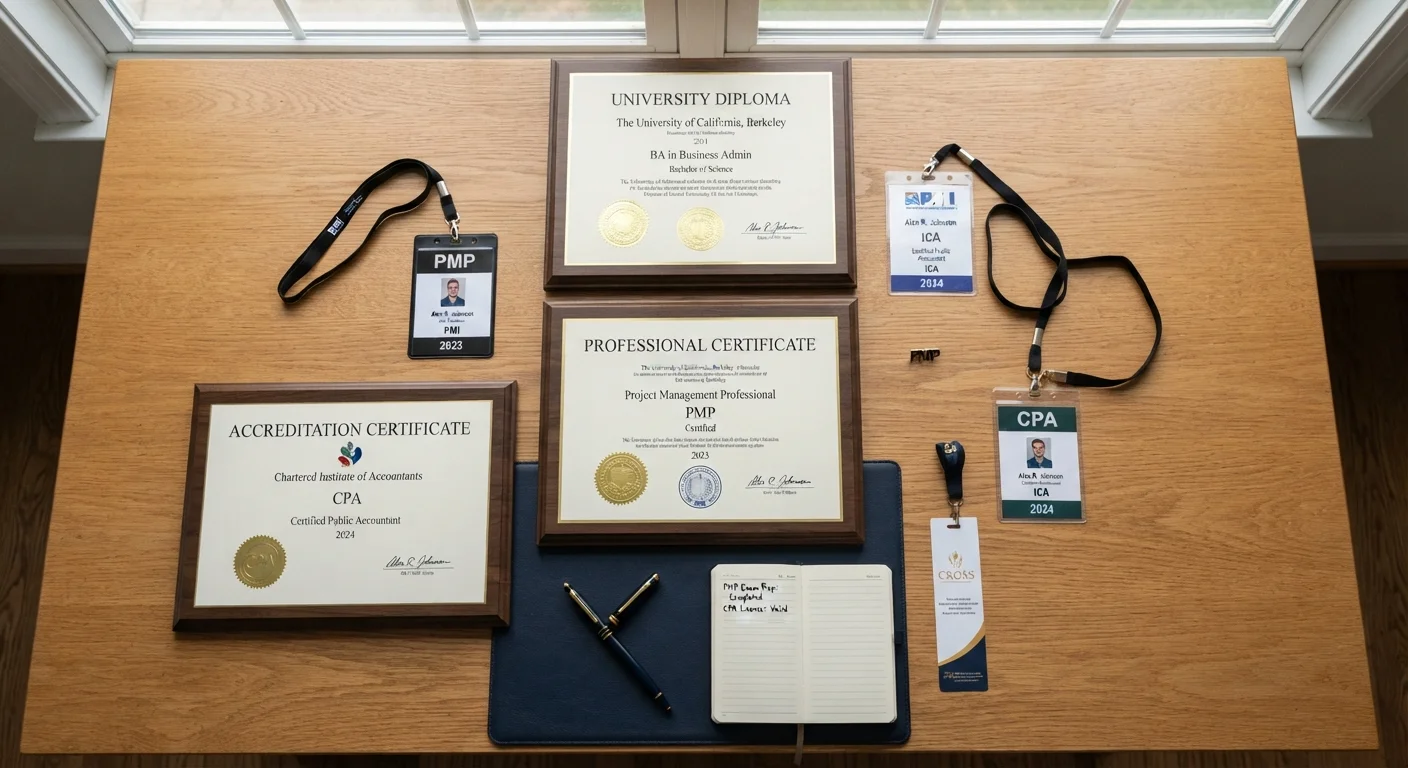
Adult learners researching education options frequently encounter three terms - degree, certificate, and certification - used as if they mean the same thing. They don't. Each represents a fundamentally different type of credential, granted by a different kind of institution, for a different purpose. Mixing them up can lead to enrolling in a program that doesn't serve your actual goal.
The distinction also matters to employers. A hiring manager in IT interprets a certification from a professional body very differently than a college certificate in IT fundamentals. Understanding what you're earning - and who stands behind it - is foundational to making a sound education investment.
For context on why the institution granting your credential matters, see our guide on accreditation and why it matters before enrolling.
| Who Issues a Degree | Accredited colleges and universities |
| Who Issues a Certificate | Schools, community colleges, vocational institutions |
| Who Issues a Certification | Industry organizations, trade associations, professional bodies |
| Typical Degree Length | 2-4+ years (associate's to bachelor's) |
| Typical Certificate Length | Weeks to 2 years |
| Certification Renewal | Often required - varies by credential body |
Breaking Down Each Credential Type
Academic Degrees
A degree is awarded by an accredited college or university upon completing a structured program of study - typically an associate's (2 years), bachelor's (4 years), master's, or doctoral program. Degrees signal broad academic competency in a field and are granted solely by degree-granting institutions authorized to do so.
Certificates
A certificate is an academic credential awarded by a college, university, or vocational school after completing a focused, shorter course of study - often weeks to two years. Certificates are still tied to an academic institution, so accreditation matters. They're not the same as standalone certifications and generally do not carry the same credit-bearing weight as a degree.
Certifications
A certification is a professional credential awarded by an industry organization, trade association, or certification body - not a school. It typically requires passing an exam, meeting experience requirements, or both. Certifications validate specific, job-ready competencies and are often renewed periodically. Well-known examples exist across IT, project management, healthcare, and the trades.
Academic Degree
A credential awarded by an accredited college or university upon completing a formal program of study. Degrees range from associate's to doctoral level and represent broad disciplinary competency.
Certificate
An academic credential from a school or college recognizing completion of a shorter, focused curriculum. Unlike a degree, it typically does not require a broad general education component.
Certification
A professional credential granted by an industry or trade organization, usually requiring an exam and sometimes work experience. It is not issued by an academic institution and often requires periodic renewal.
Accreditation
A quality-assurance process by which schools and programs are evaluated against established standards. Attending an accredited institution affects credit transferability, employer recognition, and financial aid eligibility.
Credential Body
The organization responsible for issuing and overseeing a specific certification. For professional certifications, this is typically a trade association or independent certifying agency rather than a school.
If you're weighing whether a certification alone can advance your career, the comparison of certifications vs. degree programs in the workplace offers useful field-by-field context.
Choosing the Right Credential for Your Situation
The right credential depends on your field, your current experience level, and your specific goal. Consider the following:
- Entry into a regulated profession (nursing, engineering, law): A degree - and often a license - is typically required. Certifications alone generally won't satisfy licensing boards.
- Career pivot with limited time or budget: A certificate from an accredited institution or a respected industry certification can demonstrate focused, current skills without a multi-year commitment.
- Advancing within your current field: Professional certifications that signal mastery - especially those with wide employer recognition - can strengthen your case for promotion or higher pay in technical fields.
- Returning to education after a gap: A certificate program may serve as a lower-stakes re-entry point before committing to a full degree.
The overview of industry certifications worth pursuing without a four-year degree covers fields where professional credentials carry particular weight. And if you're unsure whether to deepen existing skills or build entirely new ones, the guide to upskilling vs. reskilling can help clarify your direction.
Licenses Are a Separate Category
Beyond degrees, certificates, and certifications, many occupations require a government-issued license to legally practice - think registered nurses, electricians, or real estate agents. Licenses are granted by state regulatory bodies, not schools or industry groups. A certification may support a licensing application, but it is not a substitute for a license where one is legally required. Always verify the requirements for your specific occupation and state.
The content provided on our blog site traverses numerous categories, offering readers valuable and practical information. Readers can use the editorial team’s research and data to gain more insights into their topics of interest. However, they are requested not to treat the articles as conclusive. The website team cannot be held responsible for differences in data or inaccuracies found across other platforms. Please also note that the site might also miss out on various schemes and offers available that the readers may find more beneficial than the ones we cover.