

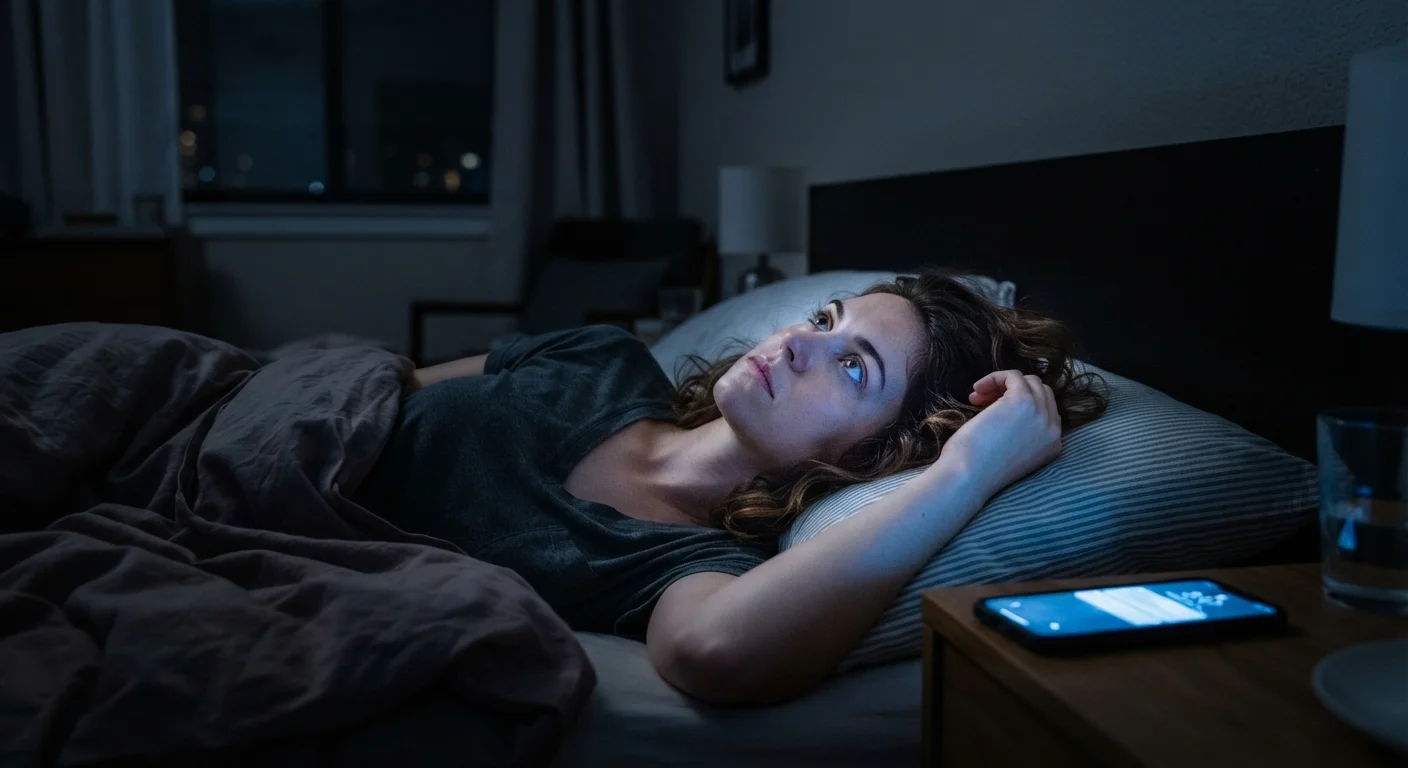
The Hidden Cost of Your Evening Habits
Most people approach sleep hygiene the wrong way - focusing on what happens in bed rather than the two to three hours that precede it. Research in sleep science consistently points to evening behavior as a primary driver of sleep quality. The habits covered below are common, well-intentioned, and often completely invisible as culprits until sleep starts to suffer.
Understanding why these patterns interfere with sleep - not just that they do - gives you a practical foundation for change. As the relationship between sleep timing and health makes clear, when and how you prepare for sleep matters as much as how long you sleep.
Using screens - phones, tablets, TVs - in the hour or two before bed.
Why it happens: Evening screen time is deeply habitual and socially normalized. Winding down with a show or scrolling social media feels relaxing, even though the light emitted is physiologically activating.
Eating a large meal within two to three hours of going to bed.
Why it happens: Work schedules and family logistics frequently push dinner late. It is easy to underestimate how long digestion takes and how actively the gut works after a substantial meal.
Drinking alcohol in the evening as a way to relax before sleep.
Why it happens: Alcohol genuinely reduces the time it takes to fall asleep, which reinforces the belief that it aids sleep. The sedative effect feels like evidence that it is working.
Keeping an inconsistent bedtime from night to night.
Why it happens: Weekends, social events, and workload variations naturally shift sleep timing. Many people treat sleep schedule variability as a minor inconvenience rather than a measurable health factor.
Engaging in high-intensity exercise within 90 minutes of bedtime.
Why it happens: Busy schedules leave evening as the only practical exercise window for many people. Evening workouts are far better than none, but timing and intensity both matter.
Engaging in stressful mental activity - work emails, financial planning, difficult conversations - right before bed.
Why it happens: The evening is when many people finally have uninterrupted time to address unfinished tasks. The psychological pressure to clear the inbox or resolve an issue feels more urgent than the need to decompress.
What the Science Says - and What You Can Do Tonight
Each mistake above points to the same underlying principle: your brain and body need a gradual, consistent transition from alert wakefulness to restful sleep. The nervous system does not switch off on command. Stimulants, light signals, food, and irregular schedules all send the wrong message at the wrong time.
35%
US adults sleeping less than 7 hours
According to CDC surveillance data, more than one in three American adults regularly gets less than the recommended minimum of seven hours of sleep per night.
~90 min
Melatonin suppression from screen light
Research published in the journal PNAS found that evening use of light-emitting devices can delay melatonin onset by roughly 90 minutes compared to reading printed material.
24%
REM sleep reduction linked to alcohol
A meta-analysis in Alcoholism: Clinical and Experimental Research found that even moderate alcohol consumption before bed reduces REM sleep by approximately 24 percent in the first half of the night.
The good news is that small, sustained changes tend to compound quickly. Sleep architecture - the cycling pattern of light, deep, and REM sleep - is remarkably responsive to behavioral shifts. Most people notice meaningful improvements in how refreshed they feel within one to two weeks of addressing even one or two of the habits above. For a structured approach, see our guide to building an effective wind-down routine.
Chronic Sleep Issues May Need Professional Attention
If you have consistently followed good sleep hygiene practices for several weeks and still struggle to fall or stay asleep, a healthcare provider can evaluate whether an underlying condition - such as sleep apnea, restless leg syndrome, or clinical insomnia - may be involved. These conditions are common and treatable, but require proper assessment. Do not delay seeking care on the assumption that habit changes alone will resolve a persistent problem.
It is also worth noting that chronic poor sleep does not only affect how tired you feel the next morning. Research shows a well-documented bidirectional relationship between sleep and emotional health - a topic explored in depth in our piece on how sleep and mental health influence each other. Protecting your evenings is, in many ways, protecting your broader wellbeing.
This article is for general informational and educational purposes only and is not a substitute for professional medical advice. If you have persistent sleep difficulties or concerns about your health, please consult a qualified healthcare provider.
The content provided on our blog site traverses numerous categories, offering readers valuable and practical information. Readers can use the editorial team’s research and data to gain more insights into their topics of interest. However, they are requested not to treat the articles as conclusive. The website team cannot be held responsible for differences in data or inaccuracies found across other platforms. Please also note that the site might also miss out on various schemes and offers available that the readers may find more beneficial than the ones we cover.