

Summary
22 items · 30-60 minutes
Why a Weekly Habit Audit Works
Daily routines feel automatic by design - that's what makes habits useful. But that same automaticity means it's easy to drift from what actually supports your health without noticing. A structured weekly audit interrupts that drift before it compounds.
Research on habit formation consistently shows that self-monitoring is one of the strongest predictors of behavior change. The goal here isn't to score yourself or reach an ideal - it's to gather honest information about where your energy, sleep, eating patterns, and stress management actually landed this week, then use that information to make one or two targeted adjustments.
This checklist covers five interconnected domains: sleep, movement, nutrition, stress, and social health. They're not siloed - poor sleep affects movement motivation, which in turn affects stress tolerance. For a broader view of how these domains interact, see our whole-person habits framework.
Set aside 30-60 minutes, ideally at the same time each week. A Sunday evening or Monday morning works well for most people. Work through the checklist below with last week's actual behavior in mind - not your intentions.
Notebook or digital journal
Record your honest yes/partial/no responses and jot observations for each checklist area.
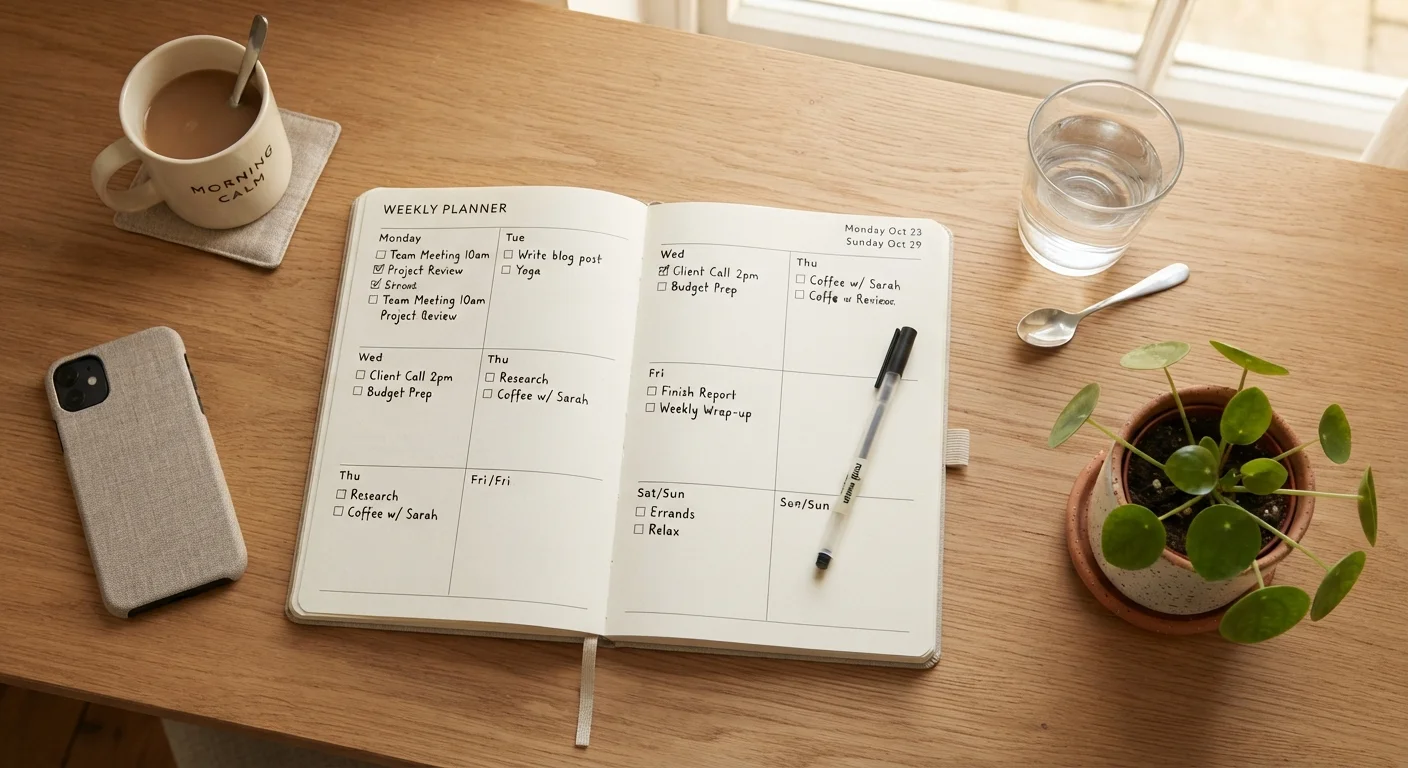
Weekly planner or calendar
Cross-reference your actual schedule with your movement, sleep, and nutrition intentions to spot consistent gaps.
Health or fitness tracking app
Provides concrete data on steps, sleep duration, and heart rate to supplement your perceived assessment - useful but not required.
Timer (phone or kitchen timer)
Set a 30-60 minute limit so the audit stays focused and doesn't expand into an unproductive rumination session.
How to Use This Checklist
For each item, give yourself an honest yes, partial, or no. Don't aim for a perfect score - the value is in spotting consistent gaps. After completing the full checklist, identify no more than two or three areas where a small, concrete change is realistic this coming week.
If you use a wearable or health app, you can cross-reference your data here - but numbers aren't required. Perceived quality of sleep, energy levels, and mood are valid signals too. For guidance on when tracking data helps versus when it adds unnecessary pressure, see tracking health metrics at home.
Sleep
Movement
Nutrition
Stress & Mental Wellness
Social Health & Connection
This Checklist Is Not a Diagnostic Tool
The items in this audit are designed to prompt general self-reflection on common health habits - they are not clinical screening questions and cannot identify, diagnose, or rule out any health condition. If you notice persistent symptoms such as chronic fatigue, significant mood changes, disordered sleep, or unintended weight changes, these are signals to raise with a qualified healthcare professional rather than address through lifestyle adjustments alone. Always seek professional guidance before making significant changes to your health routine, especially if you have an existing medical condition.
Acting on What You Find
Once you've worked through the checklist, resist the urge to overhaul everything at once. Sustainable change typically comes from narrowing your focus. Pick the single domain where a gap is most affecting your daily quality of life - fatigue, persistent low mood, frequent illness - and choose one concrete, specific action to address it this week.
If you consistently notice the same gaps week after week despite genuine effort to address them - particularly around sleep quality, energy, mood, or physical symptoms - that pattern is worth discussing with a healthcare provider. This audit is a tool for general wellness awareness, not a diagnostic instrument.
For mornings specifically, the sequence of your first hour matters more than many people realize. Morning routine architecture explains how ordering hydration, light exposure, and movement can shape energy throughout the day. If movement is a gap area, starting a daily walking practice offers a realistic twelve-week framework that pairs well with this audit. For mental wellness specifically, a practical mental wellness self-check complements the stress and social sections of this checklist.
This article is for general informational and educational purposes only and is not a substitute for professional medical advice, diagnosis, or treatment. Always consult a qualified healthcare professional regarding any health concerns or before making significant changes to your health routines.
The content provided on our blog site traverses numerous categories, offering readers valuable and practical information. Readers can use the editorial team’s research and data to gain more insights into their topics of interest. However, they are requested not to treat the articles as conclusive. The website team cannot be held responsible for differences in data or inaccuracies found across other platforms. Please also note that the site might also miss out on various schemes and offers available that the readers may find more beneficial than the ones we cover.